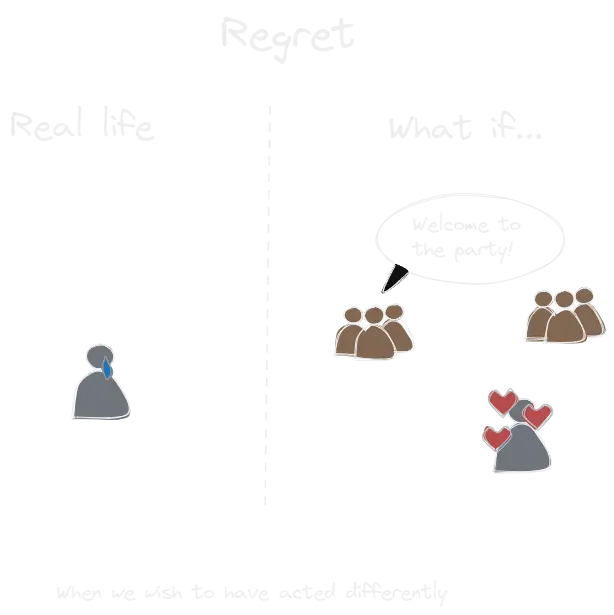
Regret
Notes
Claim
We often feel regret about the things we didn't do, rather than on the things we have done.
Explanation
If not processed well, regret can turn into guilt, where we Blame is attributing fault instead of owning what's in your control ourselves of our actions. Although, regret is often tied to cases where we felt a lack of self control, moments when we were impulsive or experienced Emotional hijacking is uncontrolled System 1 dominance over reasoning.
Why it matters
To make good use of regret, we have to see what we can learn about how to act better in the future, rather than fall into Depression is chronic despair from helplessness and lost meaning about what had not happened, or could have happened differently. It's about taking Responsibility is binding yourself to outcomes and people you value and focusing on Focus on what you can do next not what went wrong.
A key distinction is to recognize and accept what was in our control and what wasn't. There is no sense of regretting things outside of our control, nor about things that we can no longer change. The past is in the past and it is unchangeable, the only thing we control is how we act from this moment forward.
Examples
Supporters
Regret is a powerful tool. It is a mix of creative skills, the ability to imagine the Imagining alternatives sharpens our judgment and assess the implications of that change on our lives. As with other "negative emotions", regret can be used as a source of motivation Turn negative emotions into fuel for growth and action.
Opposers
Open questions
Several backlinks into this note actually describe regretting the opposite — things we did do in the heat of the moment, not what we left undone. Is the asymmetry here really about time horizon (fresh regret skews toward action, hindsight regret skews toward inaction), or is "regret" just loose enough a word that both get pointed at the same note?
Visual