Neuroplasticity
Notes
Claim
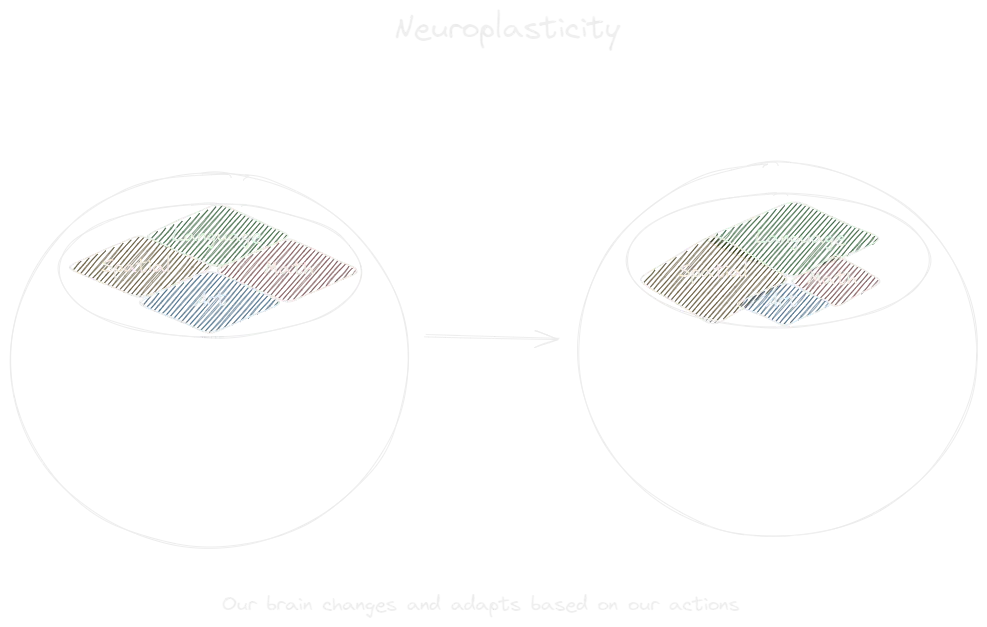
Neuroplasticity is the brain's ability to adapt. It learns based on our thoughts and experiences which sections are most used, and strengthens the connections there accordingly We optimize by keeping the most-used close at hand.
Explanation
Similarly, this means that when we study we actually change the structure of our brain, and that we can become better at something by practicing it Practice beats talent.
It is only when faced with repeat challenges of the same sort that the brains "decide" to develop that area Learning should be hard. After all, the brain is lazy and focuses on effective resource management, not prosperity Most benefits come from a small proportion of inputs.
Why it matters
The most important take from neuroplasticity is that we are not fixed, we can grow, learn and adapt. We can change not only our "software", but also our hardware (to an extent) life adaptability.
Examples
For example, taxi drivers have a developed sense of spatial awareness, to have "maps" embedded in their brain, and to constantly know where they are.
Supporters
Mastery is really this process playing out over years — each stage of getting better is the brain reorganizing itself around what we keep doing.
Opposers
That's also why it reverts back if left unused. One month of constant training is not enough to last a lifetime. It takes Consistency compounds results through reliable repeated action to maintain the advantage over time.
Open questions
Visual