Task Switching
Notes
Claim
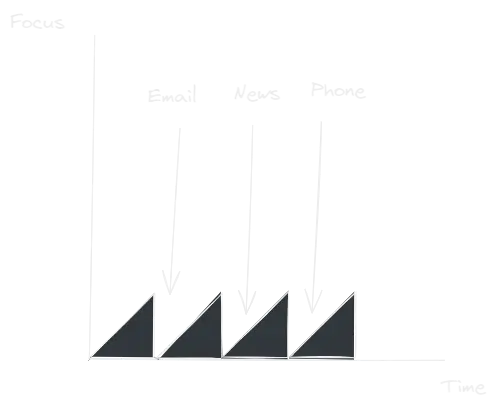
Task Switching is the idea that by switching our Focus is concentrated cognitive effort that maximizes performance on a single task from task to task we pay a price in terms of our productivity. Setting up a task, i.e to "get into the zone" takes time and effort, so by switching constantly between tasks we spend more and more of our mental energy and time just setting up the next task instead of actually doing something productive. That's why Multitasking is sequential task switching with cognitive switching costs.
Explanation
This cost occurs also when our attention fades due to Distractions, which makes the cost of distractions not only the minutes we spend looking at those, but also all the time it takes to "reload" the task — made worse by the fact that unfinished tasks tend to linger in our minds long after we've switched away.
Why it matters
This is exactly why task batching works — group similar tasks together and we pay the setup cost once, instead of over and over.
Examples
Supporters
Deep work makes the same case from the other direction — staying on one task without interruption is what actually produces the best results.
Opposers
Open questions
Visual