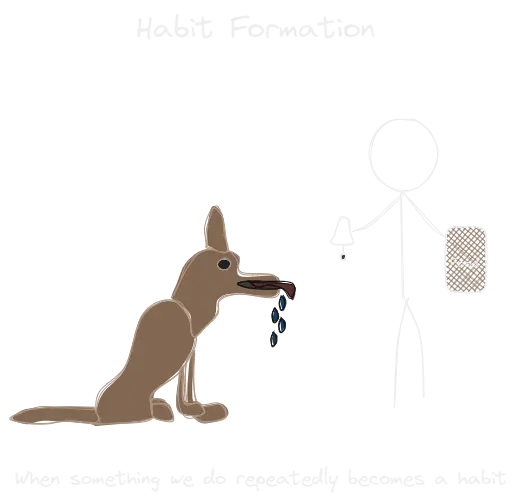
Habit Formation
Notes
Claim
Habit formation is how certain actions are converted from energy intensive actions to ones that are done automatically.
Explanation
The reason our brain converts things into habits is to save energy. It "knows" that if we are repeating an action it must be useful or important, so why not make it easier to do? We optimize by keeping the most-used close at hand. It turns from a concious thought into an automatic process, moving it from System 2 enables deliberate analytical thinking for complex problems to Automatic thinking processes drive fast emotional responses and constantly reinforced through Habits operate through a four-part loop.
Habits will probably not form for actions that are difficult, i.e involves much Friction is resistance that blocks action and behavior adoption or require Examining ideas rigorously before accepting them as true of any sort.
Similarly, since habits are all about repeatability, they are easier to form for small, fun activities.
Habits usually require a Cue, a signal for the brain to start the automated action. If we use Environmental design wisely, we can choose which cues exist in our environment so that we could enable/prevent certain habits from occurring.
Why it matters
Habits are a good way for creating routines for a better lifestyle, instead of relying on our limited willpower
Examples
Supporters
Opposers
Open questions
Visual