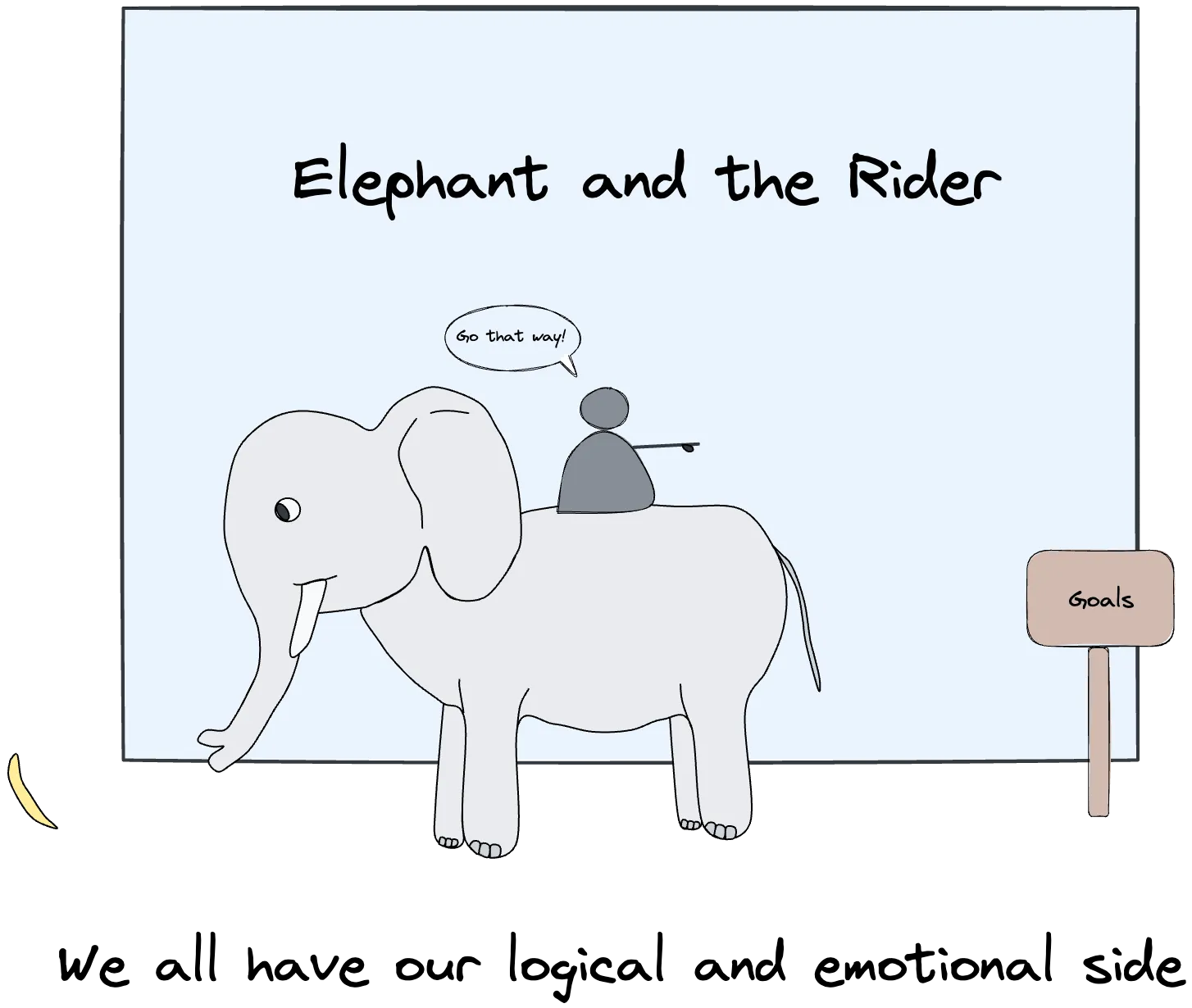
Elephant and the Rider
Notes
Claim
One can envision our behavior as being made of two parts:
- The Rider - this is our rational brain, our System 2 enables deliberate analytical thinking for complex problems, where we wish to direct our life towards a certain purpose, to follow rules and best practices, to make educated decisions
- The Elephant - This is our emotional brain, our Automatic thinking processes drive fast emotional responses, this is the part that provides us with the willpower and motivation to do as we wish, but sometimes towards goals that we wanted to avoid.
Explanation
Why it matters
Examples
Moral judgment is a clean case: patients who lose the brain's emotional channel can still reason their way to the "right" answer but never act on it, while patients who lose the rational channel show the opposite - good instincts, no explanation. Neither the Rider nor the Elephant alone is enough.
Supporters
Opposers
Treating this as reason simply defeating emotion is too neat. Self-control complicates the picture - the Elephant isn't dead weight to overpower, and the Rider is just as capable of leading us astray.
Open questions
Visual