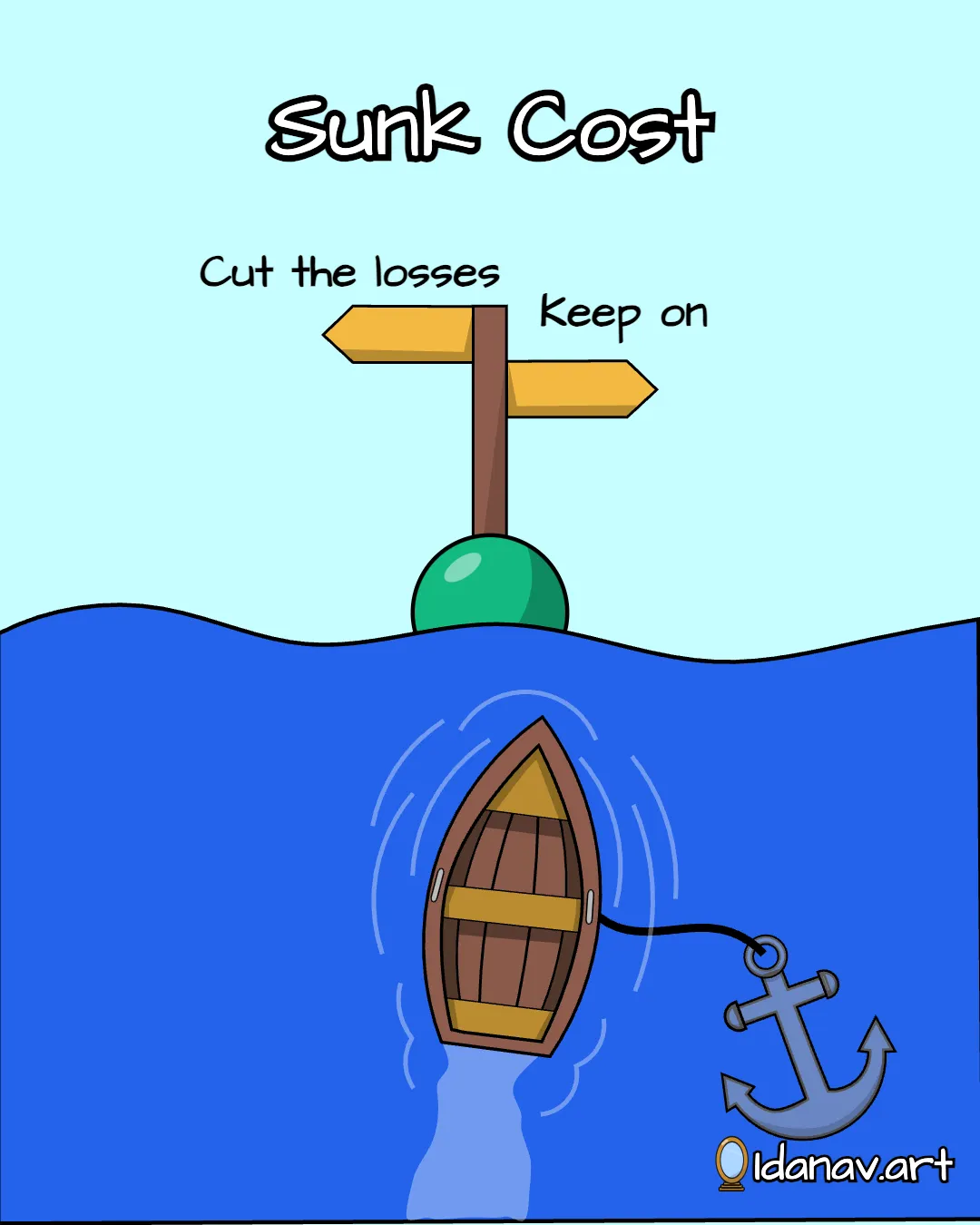
Sunk Cost
Notes
Claim
Sunk Cost is when an irrelevant action in the past serves as a justification for a certain path in the future Past choices constrain future options and behavior.
Explanation
Even if we are aware of something being a sunk cost, we still can't easily turn it down and choose the alternative Knowing the right thing doesn't mean we do it. Perhaps because we fear the damage it will bring to our Ego, perhaps our loss makes us feel entitled to something, even if the expected utility of it is still negative. We want to have "something to show for" instead of going back empty handed.
Why it matters
It takes Humility is acknowledging limits of knowledge and fallibility to say "I've done enough, let's stop here before it gets too late" and shake yourself out of a sunk cost situation. Planning Trip Wires in advance, for example "if project not completed by x, stop it", can help us avoid the effects of sunk costs.
Examples
Usually this is related to monetary issues. If we spent already 20 million on a project, we will be more likely to spend 20 million more just to finish it, although stopping now would be more beneficial than completing the project under these conditions.
Gambling is another common example. After spending most of our money at a casino, we tend to have "one more bet" just for the odds of breaking even, even though it's better to stop now than continuing to gamble.
Supporters
Opposers
Framing the decision in terms of opportunity cost - what continuing actually costs us going forward, not what we already spent - weakens the pull of sunk cost thinking Every choice costs the alternatives you gave up.
Open questions
Visual