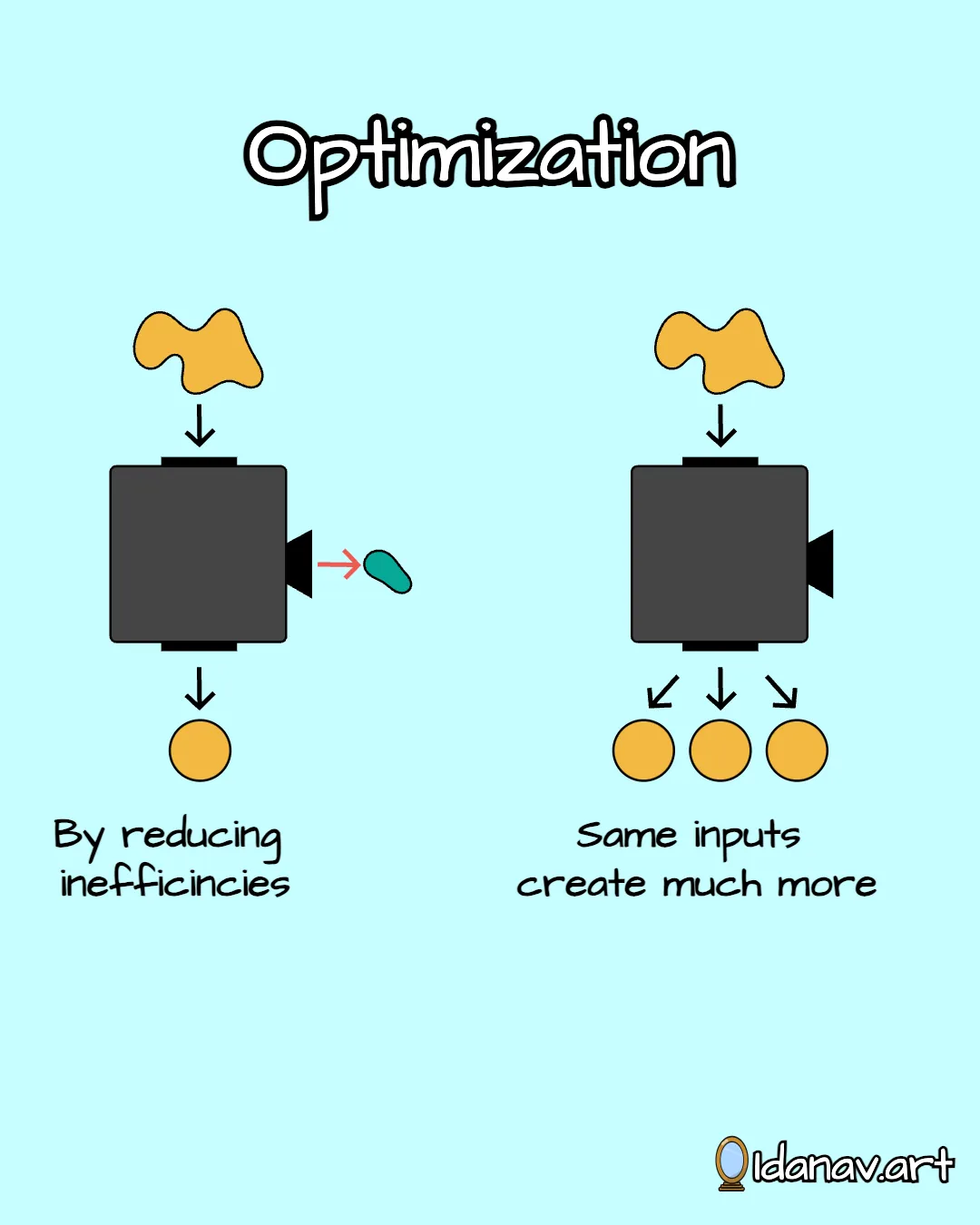
Optimization
Notes
Claim
Optimization is a combination of Perfectionism paralyzes action through unattainable standards and Actions and meaning depend on situational and environmental circumstances. It is about finding the optimal point that maximizes outputs while limiting the inputs.
Explanation
It's not about achieving the best possible score, but rather the best score we can get while also thinking about the Opportunity cost of further investment in what we are doing Most benefits come from a small proportion of inputs.
Why it matters
Most of what we invest in follows diminishing returns — past a certain point, one more unit of input barely moves the output. Knowing roughly where that point sits is what lets us stop investing before the returns go flat, or worse, negative.
Examples
Supporters
Optimization on the one hand requires Systems thinking reveals mechanisms enabling effective change, we have to distill the essential and detect Friction is resistance that blocks action and behavior adoption in the system.
Opposers
However, optimization often comes at the price of fragility. An optimized system can't account for every possible scenario, it is lean and without many Reserves build capacity to absorb unpredictability and disruption, and would probably suffer from Randomness.
Open questions
Visual