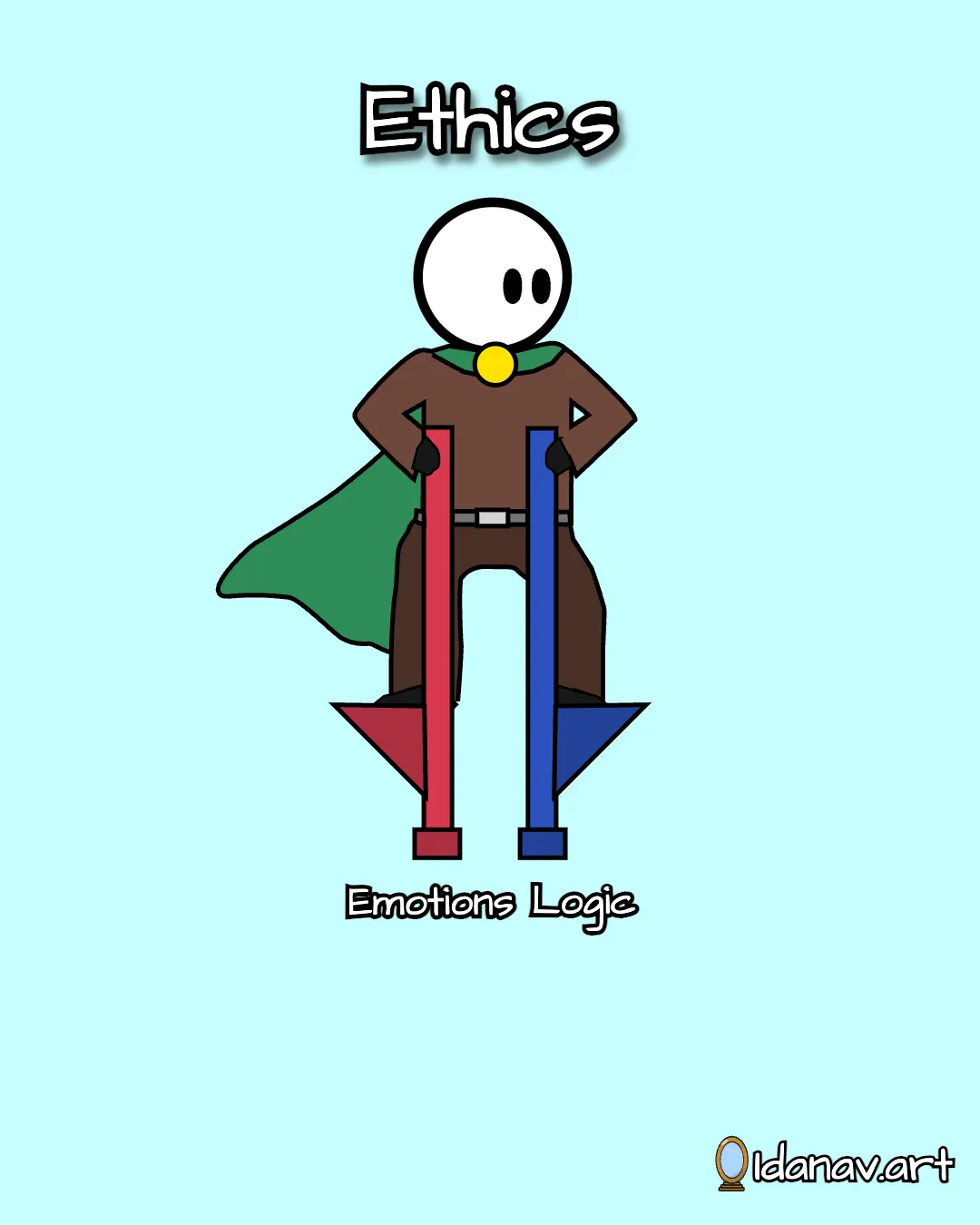
Morality is both Rational and Emotional
Notes
Claim
To act in a moral way requires us not only to know what is right, but also feel what is right. When we have knowledge without feelings, we either make cold calculations Maximizing pleasure and minimizing suffering defines moral action, or simply never act Insight Gap Intelligence is not morality. When we have emotions without knowledge, we sometimes do bad things without thinking, or by assuming that its for a good cause Gut Feeling.
Explanation
This connects to Empathy means understanding and acting on another's perspective, where empathy alone is not necessarily what we want, since it could lead us to help those whose pain is most clear, not those most in need, or stop us from doing the right thing because we focus too much on the pain, and not on the solution Morality must account for relationships and context.
Why it Matters
I believe that this supports the idea the morality has to stem from the person doing the action Cultivating virtues creates a good moral character, and can't be a premade list of rules Deontology treats morality as duties and rights that transcend consequences. It has to come from a Achieving internal harmony requires integrating all parts of yourself, from a person who unites all of their sides into a single voice, reason and emotion working together.
Examples
Supporters
For some, the fact that morality needs reason seems obvious, but less so for the emotional side. Emotions are not distractions we need to remove, they are a valuable source of information. Much of our social behavior is based on the emotions that it triggers within us, and while in some situations emotions can lead us astray, they are mostly a force for good. The same can be said about our rationality, in some cases we fall pray to biases, but in general we wouldn't want to delete our reasoning capability all together.
Opposers
Open Questions
Visual