Mental Shortcuts
Notes
Claim
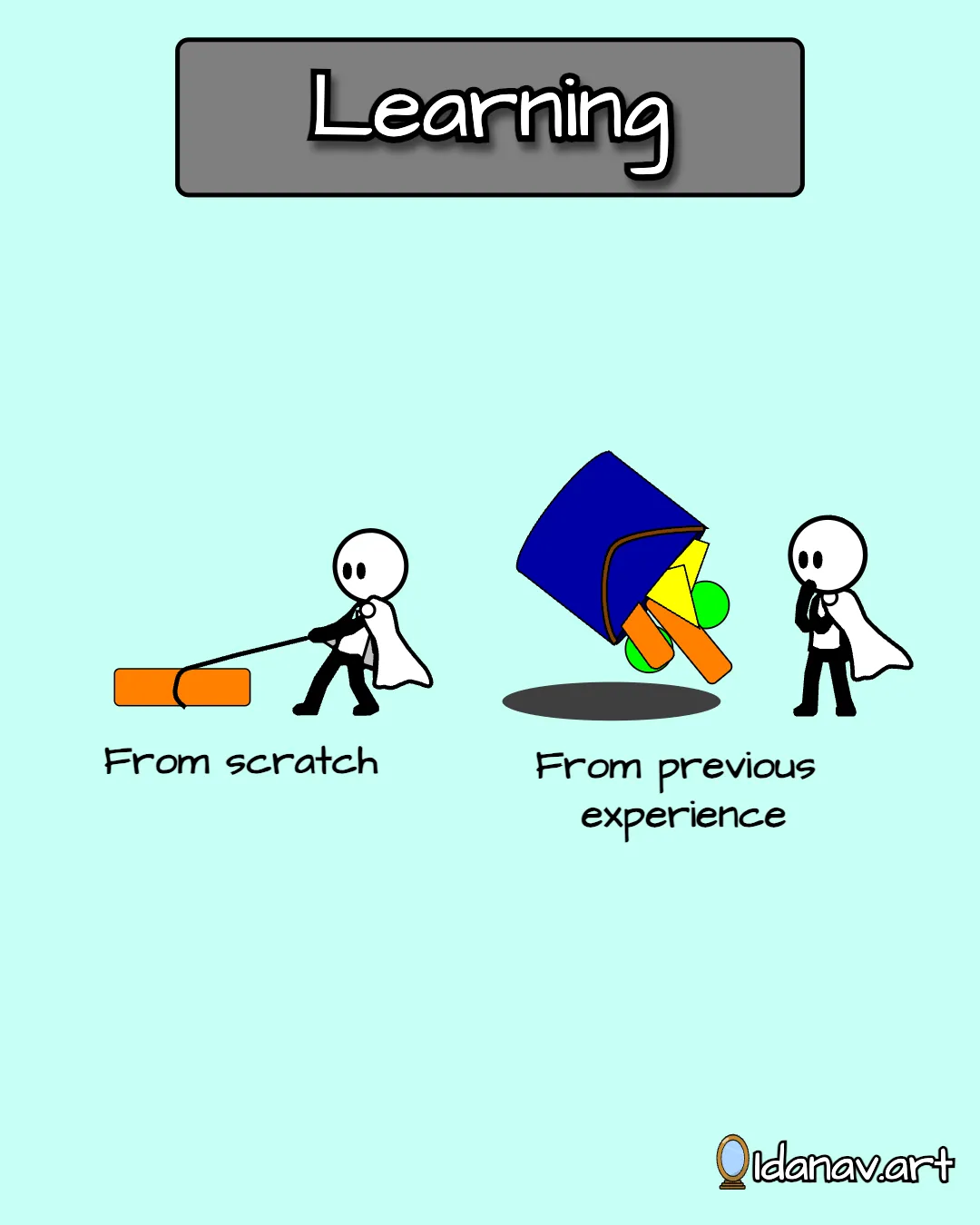
Mental shortcuts are ways for us to remember, learn and understand ideas quicker.
Explanation
Usually, this refers to analogies, that allows us to use what we've already learned to learn a new thing, to transfer it from one field to another, and thus reduce Friction is resistance that blocks action and behavior adoption while learning. We store knowledge as visual mental models
Analogies relay somewhat on a type of Systems thinking reveals mechanisms enabling effective change. We expose the similarities between two supposably unrelated fields by uncovering the similar mechanisms that drives them.
It's a shortcut for understanding, not for deciding - Heuristics are mental shortcuts enabling fast automatic decisions trade the same effort for speed, just aimed at a fast decision instead of a transferred insight.
Why it Matters
Mental shortcuts reduce the Initial effort investments create friction preventing optimal behavior change when learning something new because we leverage existing knowledge in our favor. It weakens the idea that Learning should be hard, because if we had to relearn everything from scratch every time we would know very little because each learning session would be very taxing.
Examples
Supporters
Some would say that the meaning of Mastery requires deliberate practice and hard work, not innate talent is to have good mental shortcuts, that they are the explicit expression of our Intuition is trained expertise converted to automatic response. After all, to be competent in a field means that we are able to distill it's essence into an idea that could be easily understood and used in different situations.
The more we expose ourselves to a Range of different fields, the easier it would be for us to create useful mental shortcuts.
Opposers
Open Questions
Visual