Learning Should Be Hard
Notes
Claim
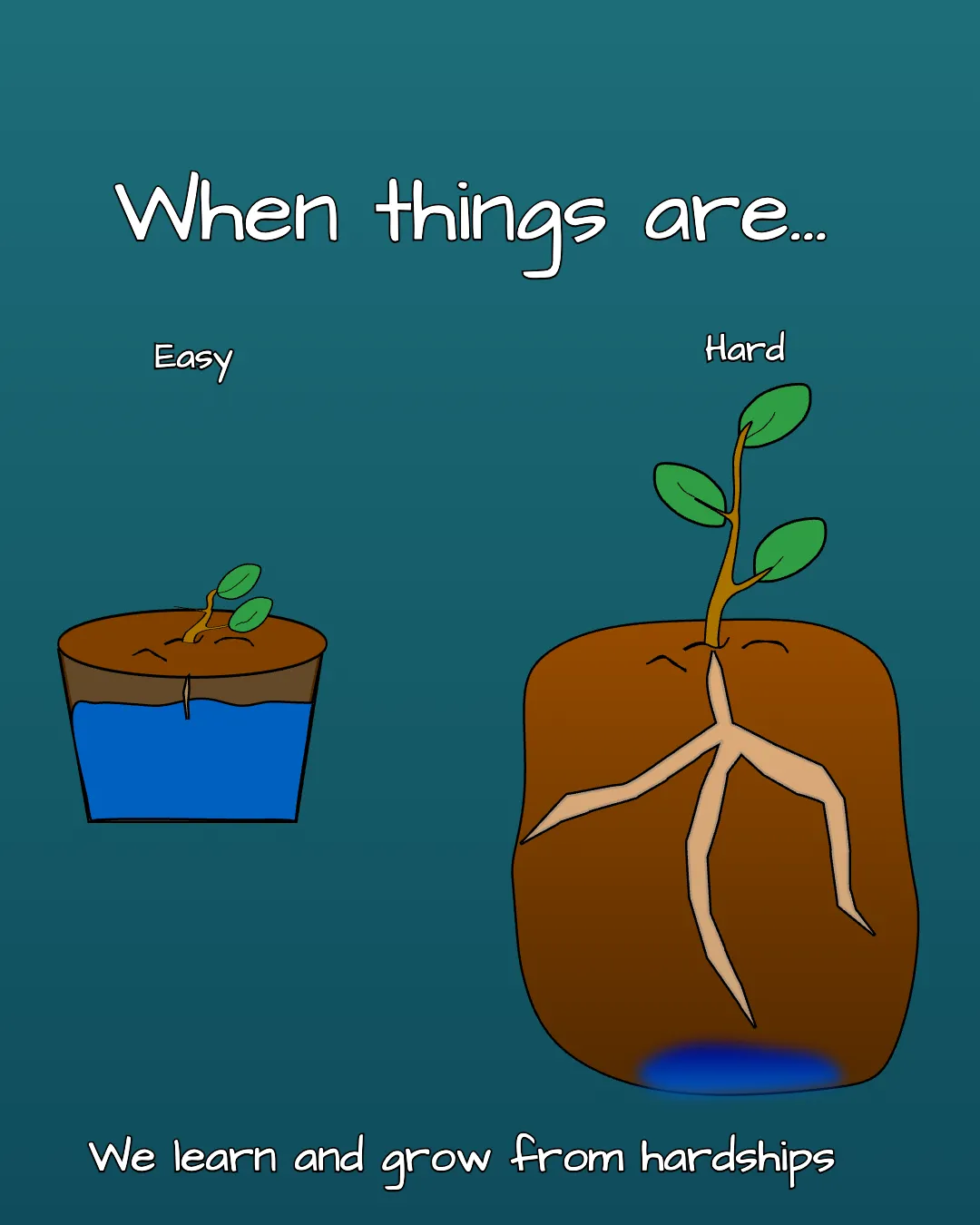
The process of memorizing and internalizing knowledge through learning necessarily goes through facing Challenges.
Explanation
It is only when the Human Brain realizes that it is incapable of acting or deciding properly in that situation without the necessary knowledge, that it determines this knowledge as "worthwhile". It doesn't necessarily means that this knowledge will be kept long-term, but at least for the near future We optimize by keeping the most-used close at hand.
Learning always requires a certain Grit enables persisting through struggle and challenge, since we often attempt to avoid challenges, at least as a default, so only with grit could we face the challenges and grow from them.
Why it Matters
We have to step out of our comfort zone. Instead of relying on shortcuts, we have to embrace a Openness to new ideas without expert bias.
Examples
We can see learning as doing exercises, comparing the brain to a muscle. Something too easy, like picking up a pencil, will never improve our fitness, only with sweat and tears our body, and our mind, can grow and adapt. Progress emerges through cycles of destruction and reconstruction
Supporters
It takes Deliberate Practice is the best way to develop skills to improve, one can't learn when it's too easy.
Opposers
While Mental shortcuts enable faster learning through analogies and simplification are helpful when learning a new topic, they can cause us to learn it in a shallow way, thinking that we already know what we need to.
Open Questions
Visual