Layering
Notes
Claim
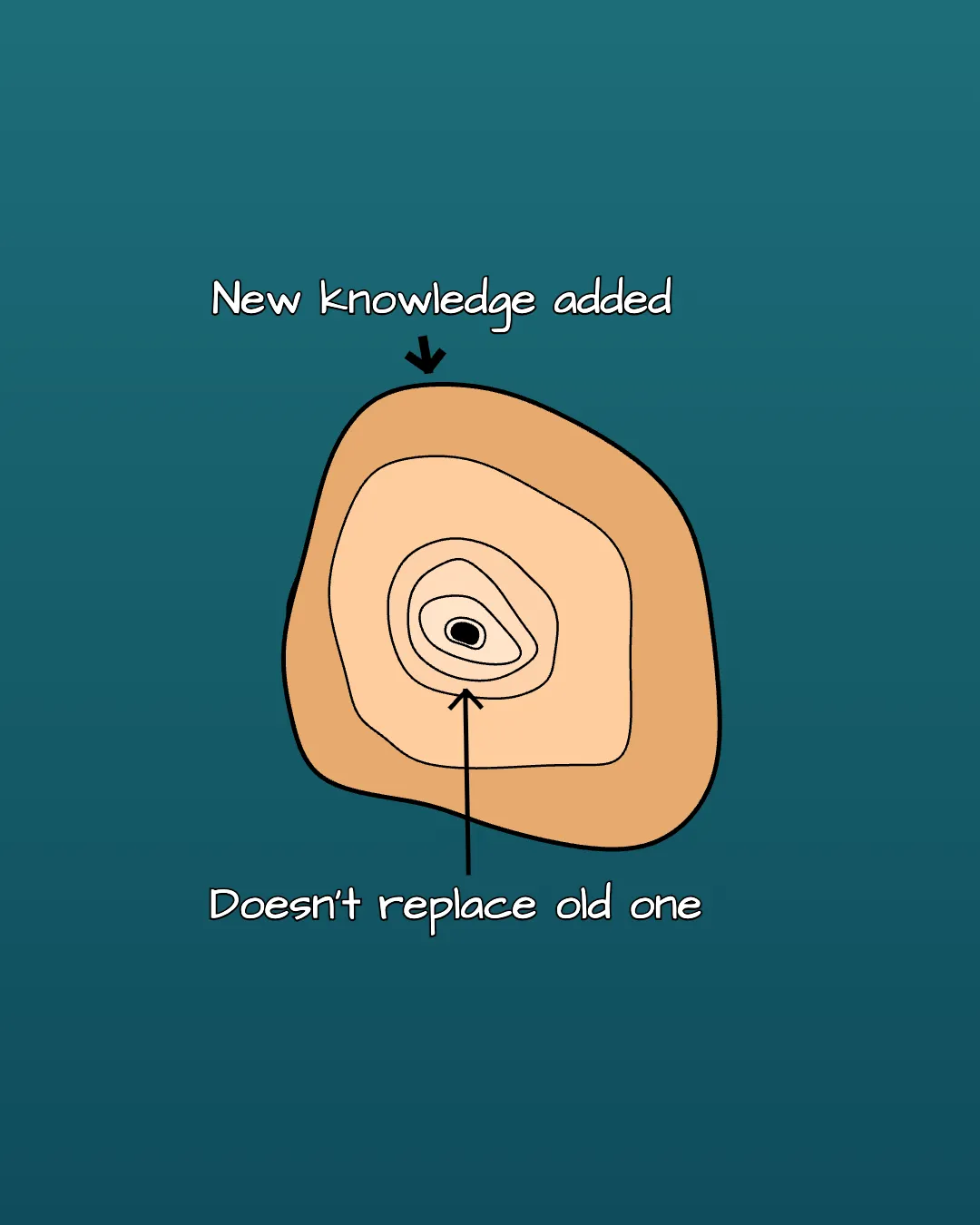
To learn or re-learn something is not to forget/delete what we once thought about this subject, but rather add a new layer of knowledge.
Explanation
When we will access our knowledge on this topic, it will work from the inside out (so basically we're creating a mount of knowledge) Knowledge emerges from interconnected beliefs not foundational truths.
This also suggests that our multitude is not a matter of independent, co-existing voices, rather than the different layers of our identity, resurfacing depending on the situation.
Why it Matters
This also means that change is perhaps not similar to Progress emerges through cycles of destruction and reconstruction, but rather simply adding new layers of personality of who we are. We might feel different but in the end we are still the same person deep down Identity persists across time through psychological continuity.
Examples
Supporters
This perhaps supports our Objectivity is loss of agency to external control and instrumental treatment, that some things in us are somewhat fixed, immutable, that at best we can cover them up, making them less likely to appear, but deep down they still exist.
Opposers
Though maybe that "deep down" isn't as solid as it feels. It's also possible there's no fixed layer underneath at all — that what we take for a stable core is We rewrite our memories every time we access them rewritten each time we access it, not preserved beneath the new layers.
Open Questions
Whether it is due to our genes or our environment Nature vs nurture, our ability to change and grow is limited.
Visual