Methods of Knowledge Management
Notes
Claim
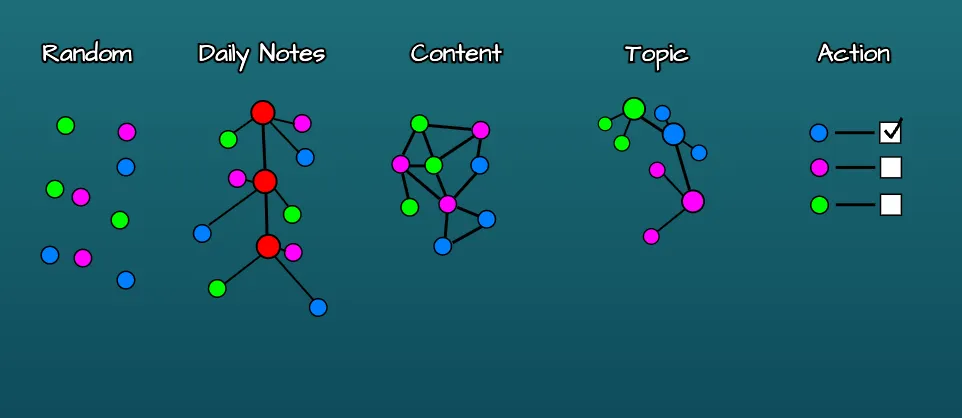
There are different methods to organize and manage knowledge, each with its own structure and navigation approach.
Explanation
- Random mess - no order or structure, no system of connection. for example - a heap of post-it notes, emails, pages in a notebook, etc... you hope that by search you can find what you need
- Daily notes first - everything is recording in the daily note. for example - what i read/heard/learned that day, could include some branching out.
- Content first atomic notes - a new page for each new topic/idea/content. the key way of navigating in your vault is through the connection between the dots.
- Topic first - a separate page/MOC/Log for projects in your self, such as a project page, research topics, areas, hobbies... Zettelkasten 2bc is an example for such a system.
- Action/Context first - the structure is based on the Actions and meaning depend on situational and environmental circumstances, i.e the primary use of each type of note. an example is the P.A.R.A method, which divides content into projects, actions, resources or archives.
Why it Matters
Whichever structure we choose, it must "make sense", i.e that it will be easy for us to find what we are looking for. Use the concept of We optimize by keeping the most-used close at hand to find the structure that supports best what you need.
Examples
Supporters
Opposers
Open Questions
Visual