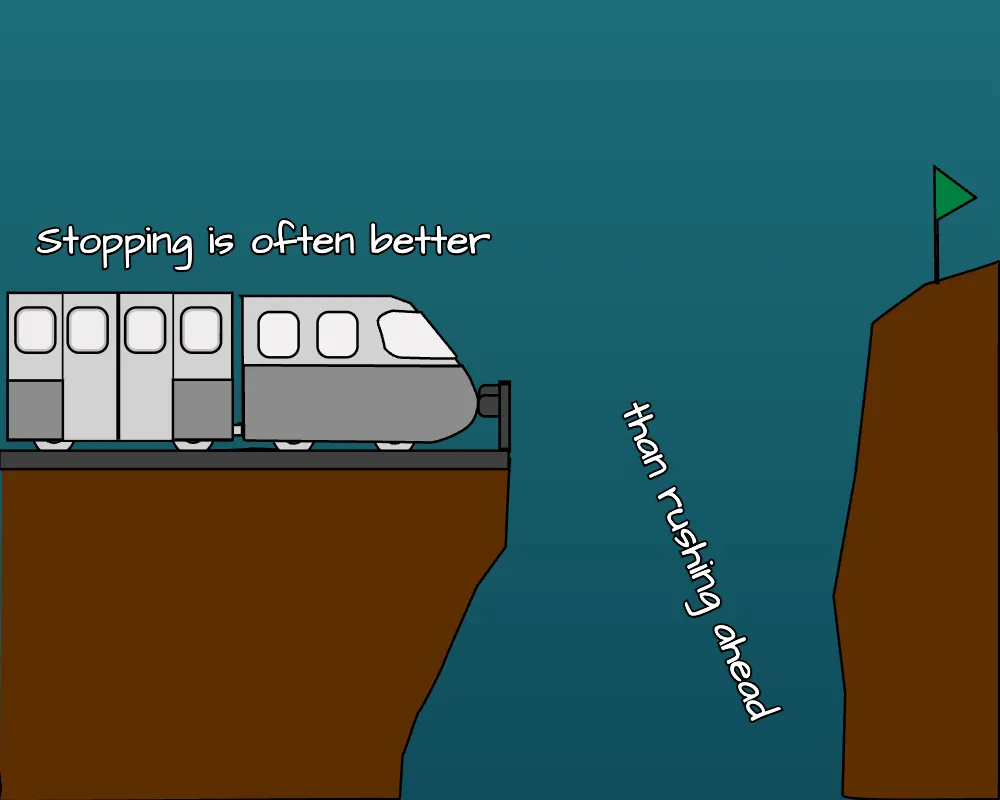
When to Quit
Notes
Claim
We have a tendency to maintain the status quo, to continue with the Momentum is movement that builds self-reinforcing forward action of our lives even when it is not the best course of action for it.
Explanation
Why we tend to overlook quitting:
- Emphasize appearance - We are affected by We draw conclusions only from what survived. We think that all those who are successful in life have never quit anything, that their success is by not giving up. It's wrong—those who are successful did so because they knew when and what to quit, and what would help them achieve their success the most.
- Sunk cost - We are affected by Past costs irrationally justify future commitment decisions. We are using the effort we made as an excuse to keep going, even when it doesn't make sense, and usually just makes it worse since the more I put in, the more I'm risking to lose, and the less I put in what would really improve me.
- Binary success - We measure success as a binary true/false. Either I completed the race or I failed. Therefore we might risk a lot just to reach our goal, blind to the true costs along the way. Binary thinking reduces complexity to false dichotomies
- Quitting is losing - We sometimes overvalue the concept of Grit enables persisting through struggle and challenge, that we must carry on no matter the consequences, that by quitting we admit to our weaknesses.
- Fear of uncertainty - The life we have now is visible, even if it's bad, we know how it's like. Contrastingly, quitting and going on a new path is a path filled with Uncertainty creates anxiety when knowledge and control are incomplete, and that makes us Fear is a primal survival emotion triggered by perceived danger it very much.
Why it Matters
Don't be enslaved to past decisions—in a world that constantly changes, and so are we, it is harmful to think that a decision of the past can enslave us indefinitely. Past choices constrain future options and behavior
Each decision should come with an expiration clause: "I will do this unless X happens" (unless the stock loses 10% of its value, unless I see that I'm unhappy in this job...). Empirical testing not reason alone discovers truth.
We should stand true to our commitment as long as they are consistent with our values and match our goals. While it's not easy to see when we should quit, we should be aware of that possibility and make our decisions wisely in light of advantages/disadvantages of each choice.
Examples
Supporters
Opposers
Open Questions
Visual