Journaling
Notes
Claim
Journaling is a written form of Introspection develops self-knowledge through internal examination, it is to document your thoughts, your emotions, the events of your life.
Explanation
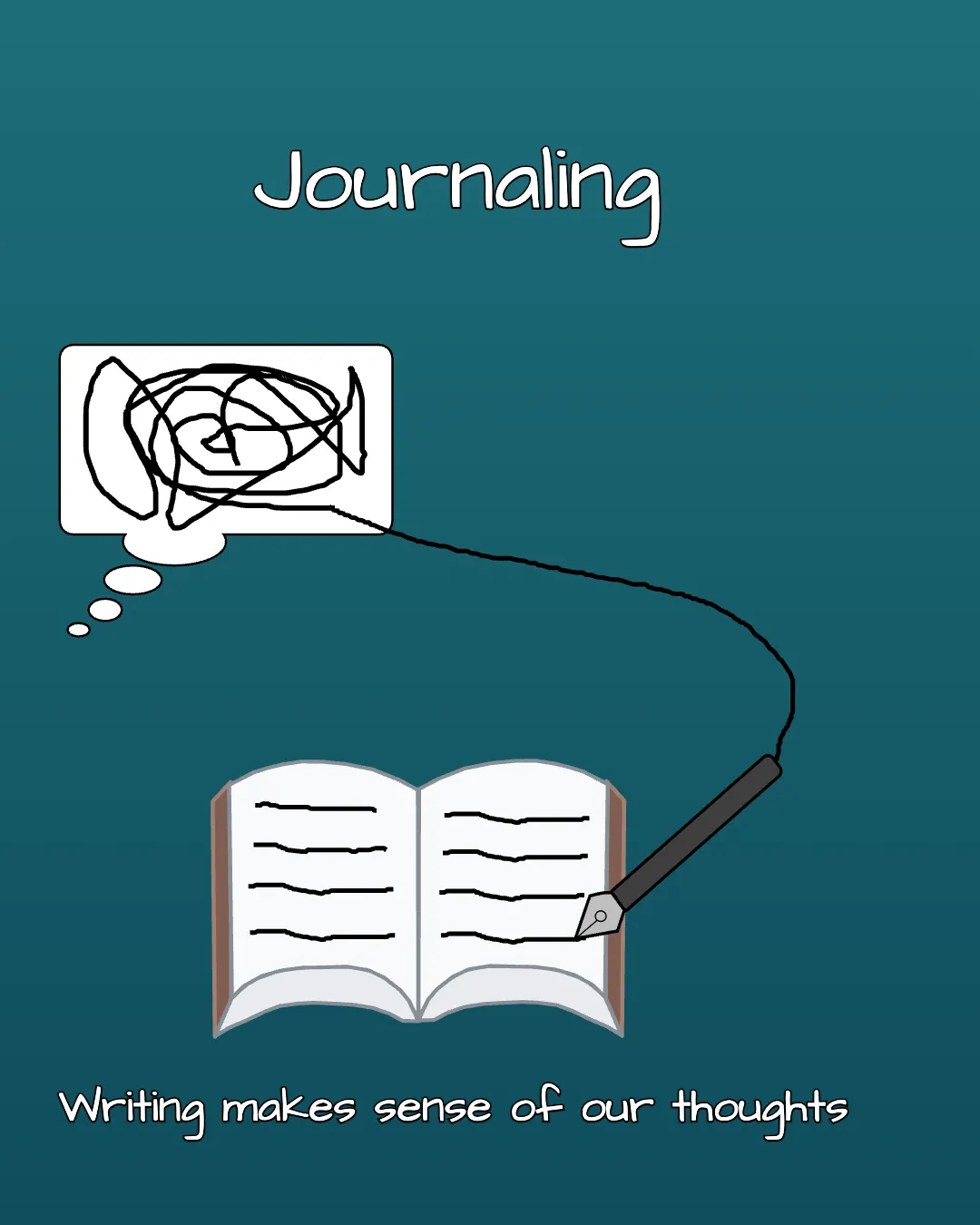
By journaling we can view our thoughts as an external observer, as if our writing is a partial time capsule of who we were in that moment. Reading our words, preferably out load, is different from just thinking them. It brings Clarity is achieved through definition and presentation, and allows for Separating actions from identity allows growth.
It is a form of One-time effort investment yields future benefits, because by transferring our thoughts to the page, we can direct resources to processing rather than remembering their content Our mind is a processor and not a warehouse.
Usually it is done daily, and can be as versatile as your imagination, it can be in the form of:
- Questions - like "how was your day?", "did you do your best to be physically active?"
- Empty dumping - Just a blank space where you can dump your thoughts and ideas
- Scoring - give a score or a yes/no to things you've done today like meditating
Why it Matters
By documenting and reflecting on our life, we increase Active engagement turns information into knowledge with our memories, improving retention and self understanding.
Examples
It can also be done on different levels across time, for example to track your emotions throughout the day, and your values in life on a yearly basis IDEA system
Supporters
Opposers
Open Questions
Visual