Indifference
Notes
Claim
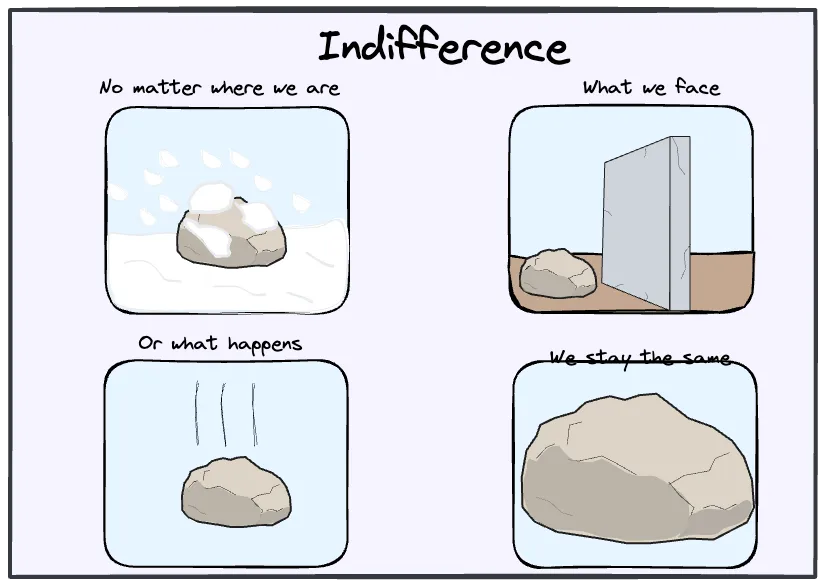
Indifference is when we have no preference over something. It can either be good or bad.
Explanation
Why it Matters
Examples
They say that the greatest feat of the stoics was their ability to suspend Judgment adds subjective value to objective events and be indifferent towards external circumstances in life. While it sounds sad, it does give you some advantages:
- Authenticity - To detach yourself from external influence in a way that will allows you to be authentic. Acting in alignment with your values is authenticity
- emotional resilience - we should be indifferent to things that we cant control, that's how they won't be able to hurt us. Emotional resilience enables managing hardship and maintaining composure
- better performance - when we are indifferent about the outcome, we stay away from stress and focus solely on the act, achieving Flow is deep immersion where performance peaks and self-awareness disappears.
- contentment - by being indifferent to all the "shiny" pleasures of the world, we can focus on the simple quiet things that actually brings us happiness. Happiness is contentment
Supporters
However, some level of indifference can also be a good thing, especially if it reduces some of our Attachment distorts how we see the things we cling to and lowers our Expectations shape wellbeing through the gap between desires and reality of life.
Opposers
The bad connotation is perhaps more obvious. We feel indifferent because we are detached from the world, we are not engaged with the world, or experiencing recurring Boredom signals under-stimulation and disconnection from intrinsic motivation, or on a grander scale, feel that everything is devoid of meaning.
Open Questions
Visual