Incentives
Notes
Claim
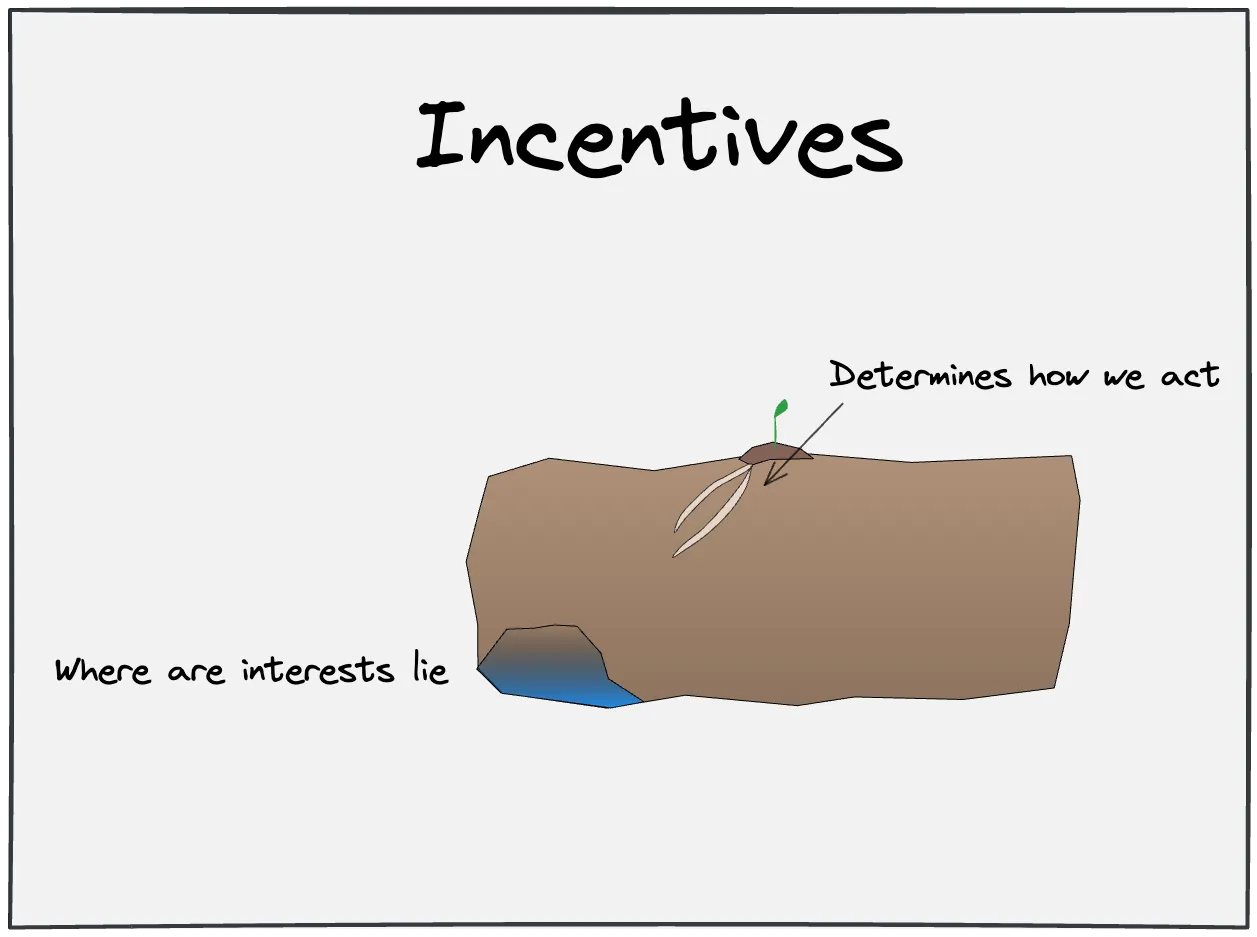
Incentives are often synonymous with "motives". Or rather incentives are the tools by which someone is motivated. Often, incentives are a type of External motivation crowds out intrinsic drive and sustainability, usually in a form of a financial benefit or harm, but not limited to that.
Explanation
Usually incentives are inwards driven, meaning that they are egoist in nature, referring to personal benefits Preferring personal benefits blinds us to others' perspectives. They turn us into Econs are purely rational agents who maximize utility that think it matters of Utility quantifies measurable benefits and guides rational decisions and logical calculations rather than our more human side of values, emotions and norms. They distort the Good action requires intention aligned with values of our actions. Even if we are incentivized to do what's right, we do it only because it benefits us, and not because we see it as an expression of our values Commodification turns non-tradable values into economic transactions. What we do becomes Instrumental value treats things as means rather than ends to us. Incentives aren't the only lever though - a nudge works differently, changing which option is easiest rather than which one pays off.
Why it matters
Sometimes we can assume the cause of someone's actions just by looking at the incentives dictated by the system he works in Systems thinking reveals mechanisms enabling effective change.
Examples
Basically, any type of reward or punishment that is given to an action, whether implicitly or explicitly, can be count as an incentive. For example, a basic incentive could be a 10% tax reduction for every donation you give, or the desire to help your sector in order to make it easier for you to be reelected.
For example, if the incomes of media companies are dictated by clicks and commercials, we can assume that it incentivizes them to write stories that maximizes clicks and emotional shock rather than provide accurate, relevant information Our attention is the product that media companies sell.
Supporters
Opposers
It gets worse when what we are incentivized to do goes against what's right, which leads to the Institutions preserve the problems they exist to solve, where incentives leads to the survival of inefficient systems whatever it takes.
Additionally, incentives harm Repeated actions become automatic through habit formation, because when the incentives stop, so does the reason to continue with the habit.
Even punishment, the harsher end of incentive, doesn't always work as planned - it can Punishment backfires by triggering resistance and perpetuating harm the very behavior it's meant to stop, breeding resistance instead of compliance.
Open questions
Visual