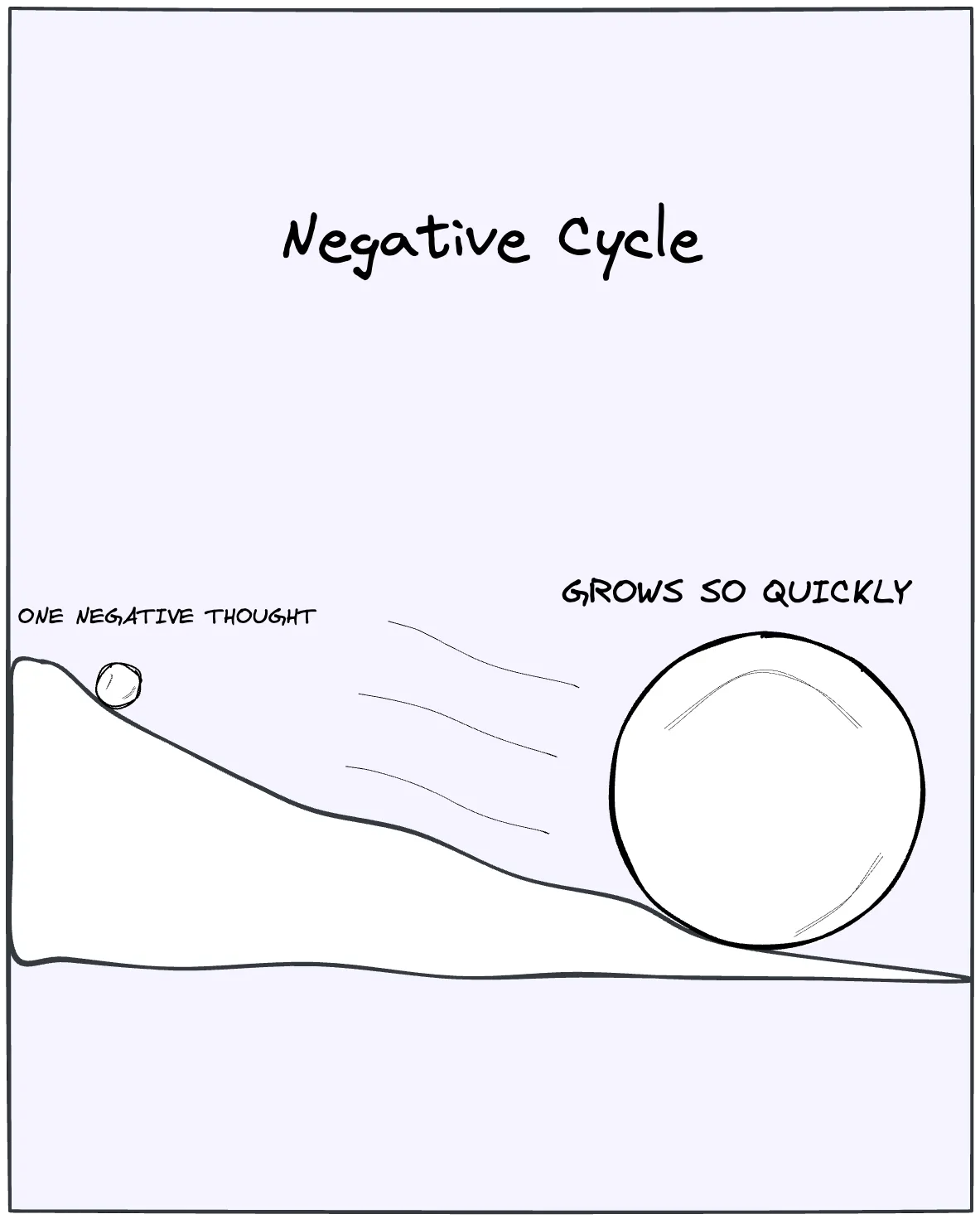
Negative Cycle
Notes
Claim
A negative cycle is whenever we do an activity which is harmful for our wellbeing, which only strenghen our Impulsivity is acting without conscious deliberation or filter to promote that activity Past choices constrain future options and behavior.
Explanation
There are two main ways of falling into a negative cycle.
The first is when we are tempted to do a certain activity. When we are unable to exert Self-control is the capacity to regulate behavior against impulses over our behavior and we give into Temptations or harmful ways of thinking, we might get stuck in negative cycle Impulsivity is acting without conscious deliberation or filter. It starts from feeling stressed or anxious, which causes us a desire to escape from this sensation, often through bad habits of temptations or other mind numbing activity. If that activity is particularly harmful, it intensifies the negativity of the cycle.
Afterwards, once we "wake up" from our uncontrollable episode, we have a clear enough mind to say "never again" and have a Symbolic fresh starts break entrenchment and enable change. However, most often we feel that we expect too much or too intensely from ourselves, which leads to feelings of anxiety which starts the cycle all over again. This cycle habituates negative behavior which can end up as an Addiction is escapism that destroys self-control.
The second type is when we fall into Emotional hijacking is uncontrolled System 1 dominance over reasoning, when we can't stop from damaging ourselves actively, even though "we know better" Insight Gap. For example, when we experience Anger is information that something should be different or engage in Self criticism is being your own harsh judge, we know that these are emotions that we don't want to feel, that we would have preferred to live without them, yet they serve a purpose. Instead of just mind numbing activities like the first case, these are actions that are meant to justify our actions, our situation, to rid ourselves of the Responsibility is binding yourself to outcomes and people you value over our own lives and behavior, to promote Helplessness is perceiving no control over circumstances and outcomes.
Why it matters
Examples
A familiar version of the first branch is treating busyness itself as the escape — using work, or a packed schedule, to avoid sitting with something uncomfortable Escapism is withdrawing from difficulty through distraction and avoidance. The more it's used to outrun the discomfort, the more the discomfort demands, and the more it gets used again — the same shape as an Addiction is escapism that destroys self-control, just dressed up as productivity.
Supporters
The same mechanic shows up outside of harm too — Momentum is movement that builds self-reinforcing forward action treats self-reinforcement as a general property of persistent action; a negative cycle is just that property running in the direction we didn't choose.
Opposers
Open questions
The explanation above really describes two different triggers — losing to temptation, and getting swept up in emotional self-justification — that happen to share the same self-reinforcing shape. Whether that's one mechanism wearing two masks or two genuinely separate cycles that only resemble each other from a distance is still open; the backlinks into this note don't currently pull toward splitting them apart, but it's worth watching as more get added.
Visual