The Habit Loop
Notes
Claim
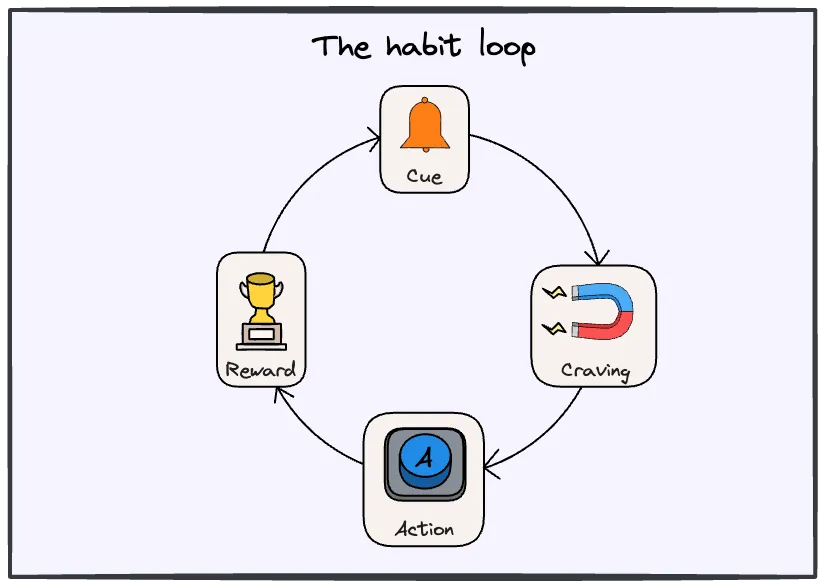
A simplistic model of how our brain triggers, reinforces and operates habits consists of 4 components.
Explanation
The habit loop consists of:
- Cue - An external stimulus (conscious or subconscious) that the brain has attached an emotional/physical response to. This is usually some type of dopamine expectation for a reward. For example, seeing a box of chocolates on the table.
- Craving - The brain's response to the cue. For example, you wish to consume the chocolate on the table (you "expect" the great sensation and enjoyment from eating the chocolate).
- Habit - The act itself, when you go with your craving—i.e., you eat the chocolate.
- Reward - The happiness received from performing the action.
Why it matters
We can use this knowledge to our advantage. Instead of using brute willpower Willpower is Limited, we can structure our environment and approach to support habit formation Repeated actions become automatic through habit formation.
Examples
We can apply this knowledge by:
- Make it clear - Have an easy to measure goal so you could know when and how to reach it. For example, the difference between "I will read more" and "I will read 25 pages every day". Clarity is achieved through definition and presentation
- Make it easy - Reduce Friction is resistance that blocks action and behavior adoption. Our environment should support our habits. If it requires tools/devices, place them within reach and ease of use. Set reminders, reduce distractions, schedule them in a time where you most likely could accomplish it, and set easy goals to start with and expand them later on. For example, don't start with 5 days 1 hour workouts; start with 2-3 practices of 20-30 mins. This is connected to the the 20 seconds rule.
- Make it attractive/satisfying - Do Bundling undesired tasks with enjoyable activities increases motivation. Make the habit task fun by coupling it with enjoyable rewards, such as fun music while running. Make sure that the reward isn't a bad habit itself, such as eating unhealthy food.
- Make yourself accountable - Make sure someone, whether a friend, colleague, coach or an organization checks up on your habits and that you reach your goals. Set a "punishment" for not sticking to your habits, such as losing money. You are responsible for what happens under your watch
Supporters
Opposers
Open questions
Visual