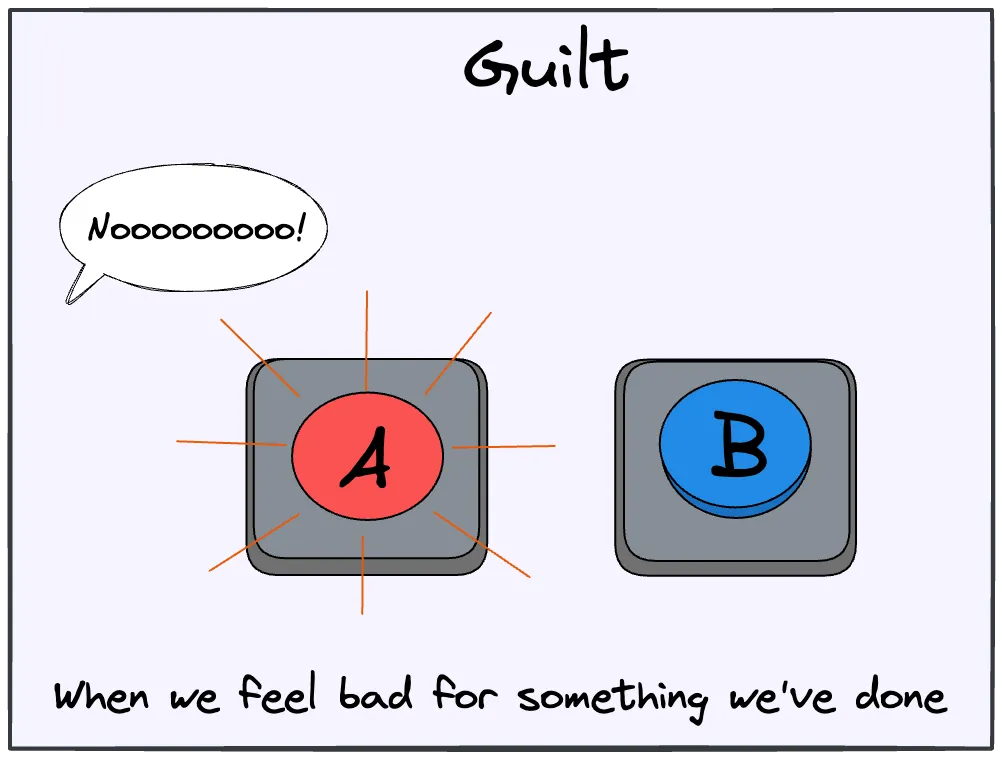
Guilt
Notes
Claim
Most often we feel guilt when we are blamed (either by others or by ourselves) for something bad that we had done when we could have done differently, indicating our sense of Agency is the ability to connect desires and actions.
Explanation
We should distinguish between guilt that arises from real damage that we have caused in the world, to feeling guilty over things that are either imaginary or not in our control. This second type stems from our Subjective perception filters how we see external reality, we fail to see reality as it is, so we add to it layers of Judgment adds subjective value to objective events and interpretation that might even not be positive.
We are very bad at being objective, which causes the sense of guilt to exist without real justification. It can result from states of Ambiguity is the absence of clarity in values or facts, for example, when have we done enough? what is our standard of measuring whether we were successful or whether we failed others?
It can also result from unfair comparisons. For example if in the past you had time to do x, and now you don't, it would be unfair for you to expect yourself to reach the same standard. You always have to set your Expectations shape wellbeing through the gap between desires and reality in accordance with reality Accepting what we cannot control is the path to peace.
Why it matters
Guilt is useful when it points at real harm we can repair, but when it is about things imagined or beyond our control it only adds weight. When it spills over from what we did to who we are, it turns into shame.
Examples
Supporters
We regret inaction more than action taken — unprocessed regret over something we didn't do is often where this guilt starts, before we even get around to blaming ourselves for it.
Opposers
Open questions
Visual