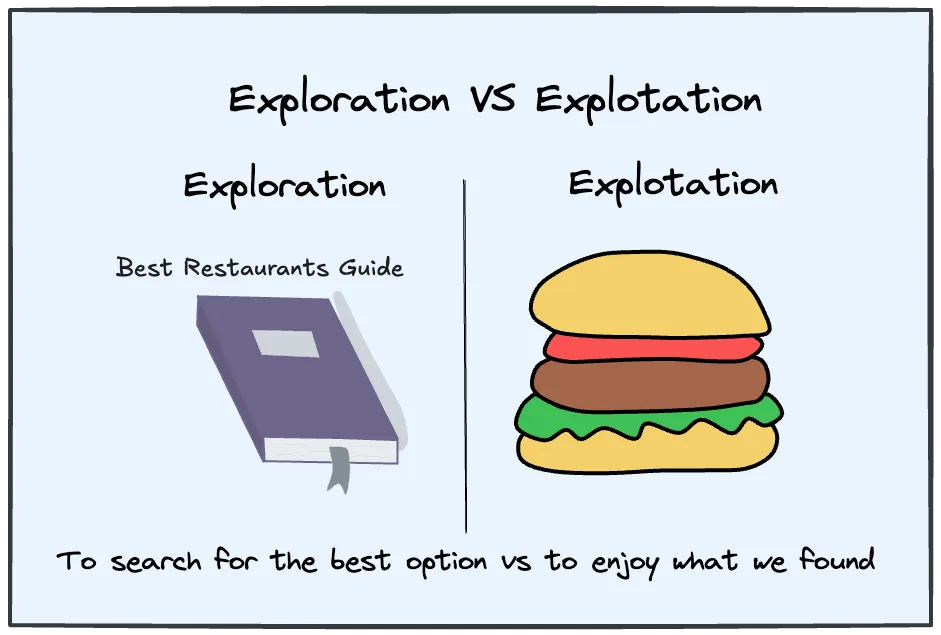
Exploration Vs Exploitation
Notes
Claim
How should you divide your time between exploring new things or sticking to the "tried and true"? Ambiguity is the absence of clarity in values or facts is relevant here, which causes us to be unsure Knowing when to stop prevents wasted persistence on misaligned goals.
Explanation
Another way of looking at it is though the concept of navigation vs pathfinding. When we pathfind, we explore, we debate where we want to go, who do we want to be. When we navigate, we know exactly where we want to go, we don't consider any other destinations, we narrow our focus to reach this destination.
Why it matters
As a general rule:
- Always keep a minimal level of exploration, to introduce new experiences and possible welfare to your life. Learning must continue constantly throughout life Biological mutations 2bc
- The less important or the shorter the future of acting in this area, the better it is to exploit the existing knowledge. Longer time horizon makes exploration more valuable than exploitation
Examples
Supporters
Distraction by novelty undermines commitment and depth is the flip side of leaning too far toward the new — every fresh gadget or tool promises to finally get us there, but chasing it keeps us from building any depth with what we already have.
Opposers
Open questions
Visual