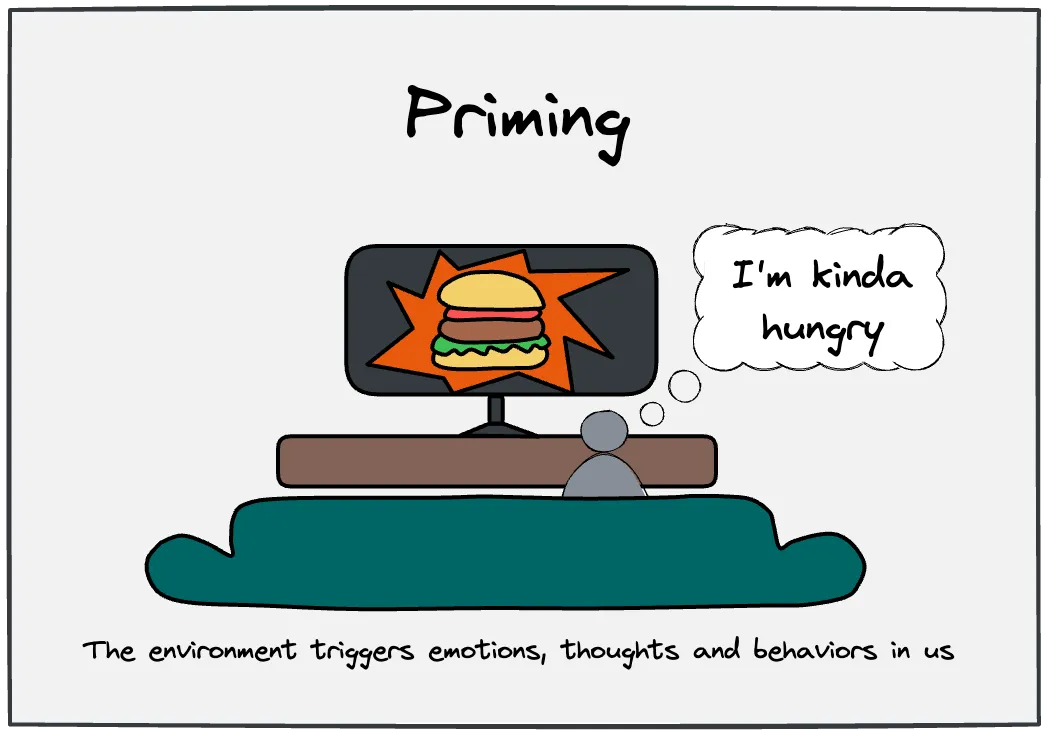
Priming
Notes
Claim
Priming is when we receive a stimulus from the environment which promotes a certain behavior.
Explanation
While it can involve How we describe something shapes how it is perceived, a cue can be something more direct and pure, affecting our Automatic thinking processes drive fast emotional responses thinking, like a smell, a sight, or even the presence of someone. A cue is a form of Emotional hijacking is uncontrolled System 1 dominance over reasoning, when the situation triggers emotions that propel us for action.
It can also involve more complex forms of triggers, such as our Social environment shapes behavior and identity through norms and conformity, the norms, cultures and behaviors that shape our Perspective.
Why it Matters
A cue isn't good or bad, the behavior it generates is what's important. Even though a cue pushes towards certain behavior, and with time this behavior can become a habit, we can design our environment intentionally.
With a beneficial Environmental design, you can create an environment with only the cues you want to have, those who promote the behavior you are seeking. Essentially, the cues we revolve ourselves with create a form of Past choices constrain future options and behavior, where certain behaviors are much more likely than others.
Examples
A classic example is a hunger for junk food when seeing snacks, being angry or scared after seeing a commercial, and feeling bad when we smell something awful.
We tend to feel more competitive and less cooperative at work. We behave differently in different social groups Identity is shaped by and shapes our social interactions, and we act differently when we feel being watched or reminded of our values (like after taking an oath or seeing the ten commandments).
Supporters
Opposers
Open Questions
Visual