Is Vs Ought
Notes
Claim
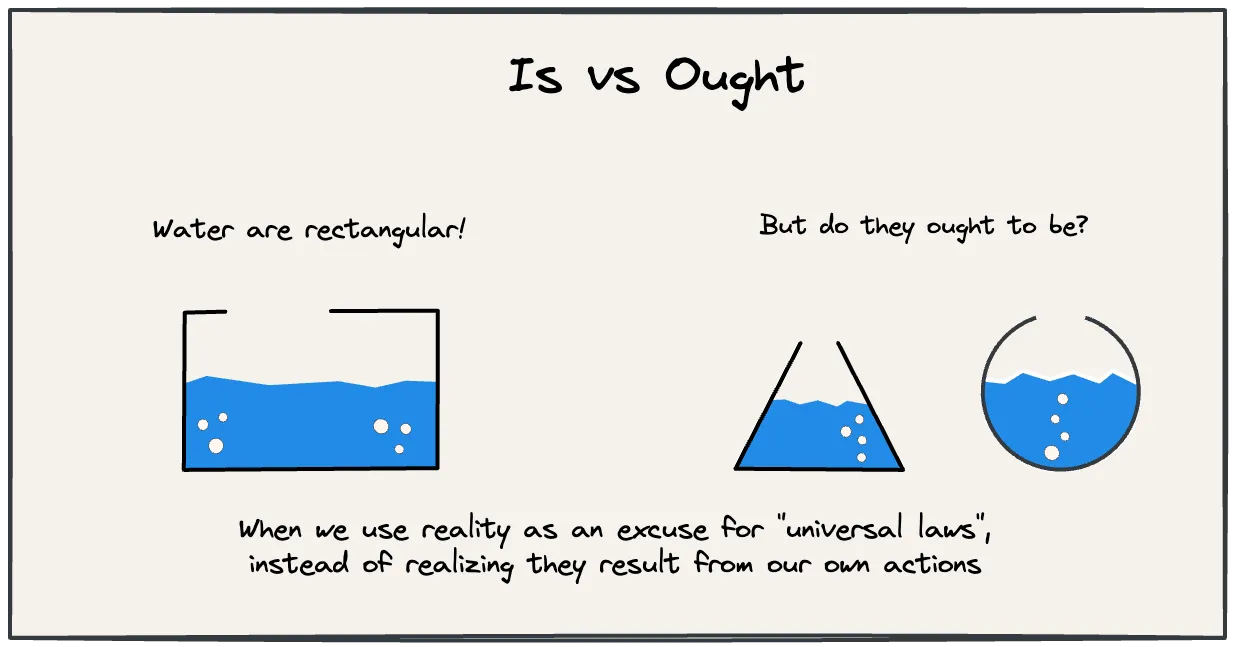
Is vs ought is a cognitive bias in which we treat the existing situation as a justification for it's existence.
Explanation
This leads to several problems:
- Circular reasoning - a thing should exist because it already exists
- Mixing facts and values - often when we talk about reasons for existing, the answers are imbued with certain values, a subjective answer, on our Judgment adds subjective value to objective events, rather than a factual one. This means that the phenomenon gets an ideological reasoning simply by existing ("it should because it is").
- Limited view - when we fall into this bias, we lack the ability to use our Examining ideas rigorously before accepting them as true to consider other options as to what can exist otherwise.
- Mixing cause and effect - We treat the current situation as the reason, instead of the outcome, for certain beliefs. Like viewing all poor people as lazy because they don't have a job, so they shouldn't receive any social help, which only makes it harder for them to find a job, which strengthens the view that they are too lazy to find a job. Self fulfilling prophecy
Both because it is hard to think about the Imagining alternatives sharpens our judgment (what if...) and because we give credit to things that have lasted long, or at least during our life-time, we fall often to this trap. The reality as it is now is so familiar that we are too attached to imagine anything else. The reality forms a Past choices constrain future options and behavior for our thoughts and beliefs.
Why it matters
Examples
Supporters
This is closely related to status-quo bias — both treat "what already is" as a reason to keep it that way, rather than evaluating it on its own merits.
Opposers
Open questions
Visual