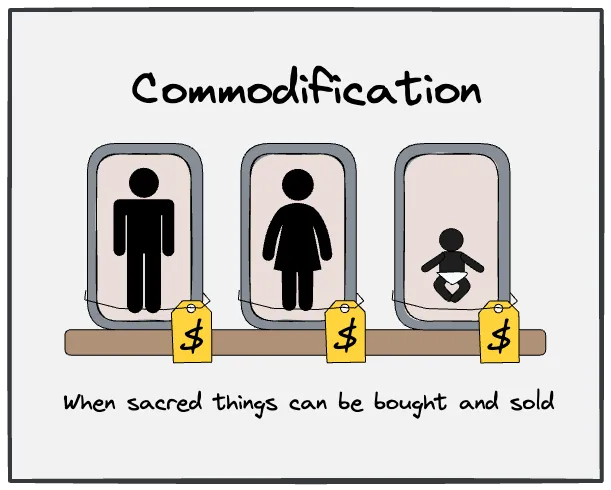
Commodification
Notes
Claim
Commodification is when an object becomes a commodity, meaning that something that was previously non tradable, can now be bought, owned, and sold.
Explanation
Adding a price tag affects our Incentives shape behavior by making certain actions more attractive but not in the way we imagined. It creates Alienation means feeling detached from life and others between our values, and what we do. It is a form of Doing good gives us permission to do harm, by paying for something, even if the price appears as a deterrents, we feel entitled to that thing. It reduces the sense of guilt for doing something wrong.
Commodification increases the distance between Distinguishing appearance from authentic substance reveals hidden conflicts, the thing itself changes when we change how we interact with it. We prefer Signaling is displaying qualities to appear worthy or successful over making the effort to be worthy of the actual thing.
Why it matters
The more serious case could be the commodification of people in general. Both in the more direct since - slavery. But also in the more soft sense, for example rating people in a dating app is sort of turning people into products that you can rate. People are measured by their Utility quantifies measurable benefits and guides rational decisions, specifically their worth to us, promoting Preferring personal benefits blinds us to others' perspectives, and distance ourselves from others before instead of having independent Moral worth, they are now only as valuable as their value to us.
Examples
If littering was considered as a social tabu, and now it is something we are fined for, does that mean that it's okay to litter as long as the price is worth it to you? Like how adding a "late fee" for picking up kids from the kindergarten only increased % of late parents, because they considered the fine as a price for extra hour, which they are entitled to do now that it has a price tag, instead of a moral tabu.
The less severe example is the question whether to treat blood or kidney donations as a donation or as something that has a price, for example giving money to those who give their blood. On the one hand, it means that we support and acknowledge their contribution, so why not compensate them in return? On the other hand, we might cause One activity displaces another when pursued excessively of positive moral considerations for donations. We replace Providing value without expectation of return cultivates wellbeing with buying. For example, people might donate now because they need the money, and not because they think its the right thing for them or for others.
"Buying" a friend, or having friends that are only around because we buy them stuff, is not the same quality of friendship as a genuine connection. While it appears as if we have many friends, in essence we have none.
Supporters
It's a specific case of Instrumental value treats things as means rather than ends — once something has a price, it becomes a means to acquiring it rather than valued for what it is.
Opposers
Open questions
Visual