Contextual Synergy
Notes
Claim
Some actions, such as learning and working will have a much higher rate of return if done in a Actions and meaning depend on situational and environmental circumstances that connects between what we are doing, and our needs, our desires at that moment.
Explanation
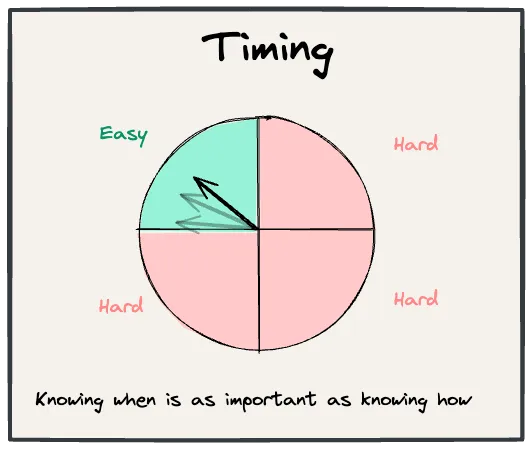
To do things in the best opportunity to maximize effectiveness. Good timing creates Momentum is movement that builds self-reinforcing forward action, while bad timing creates Friction is resistance that blocks action and behavior adoption. Good timing is dependent on:
- mental preparedness - mindset, knowledge, awareness to opportunities, circumstances (if it is an active problem)
- physical preparedness - Sleep is essential for cognitive function and peak performance, Physical activity shapes mental and emotional wellbeing, Nutrition
- resources - things that can aide us, books, articles, objects (aka Reserves build capacity to absorb unpredictability and disruption), technology
This reminds me of Aligning tasks to energy levels improves performance and reduces resistance which connects between our internal desires to the actions we are trying to fulfill, but this is more related to value we get from it instead of having the motivation for it.
This can also be a useful method to decide how to preform Triage prioritizes limited resources by allocating attention wisely on our tasks.
Why it matters
It is better to create the context you need, instead of waiting for it.
Examples
Learning a new language when we are about to move abroad is a contextual synergy, since our desire to learn it and retain that information is much stronger than if we would have tried to learn it "for fun" anytime else. Similarly, reading books that are related to experiences or thoughts you are having right now will be much more beneficial than reading self help books that solves challenges you aren't facing right now.
Supporters
Opposers
Note that there is no reason to use this as a justification for Procrastination is delaying intended actions despite preference to act. Waiting until the perfect context arrives is usually more damaging than beneficial.
Open questions
Visual