The Power of Beliefs (Book)
✒️ Note-Making
Clarify
🔈 Summary of main ideas
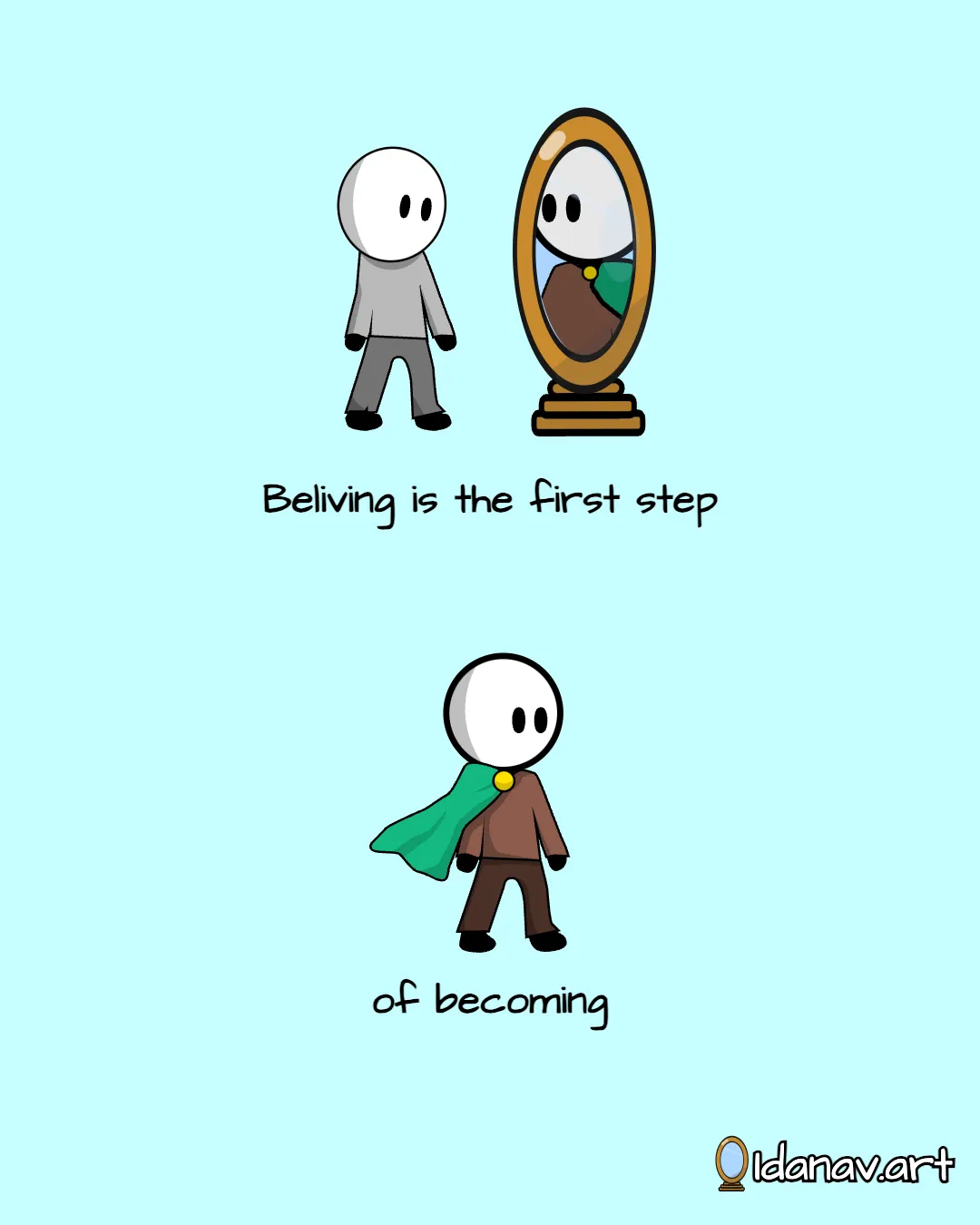
- Beliefs change reality - Beliefs are the most powerful aspect of psychology. From the placebo effect that by simply believing we can affect our body the same or better than medical treatments, to the powerful social beliefs like money that give life to a concept. The beliefs about yourself change your life from one of loneliness and burnout, to happiness and growth. That's why it's important to have strong core beliefs.
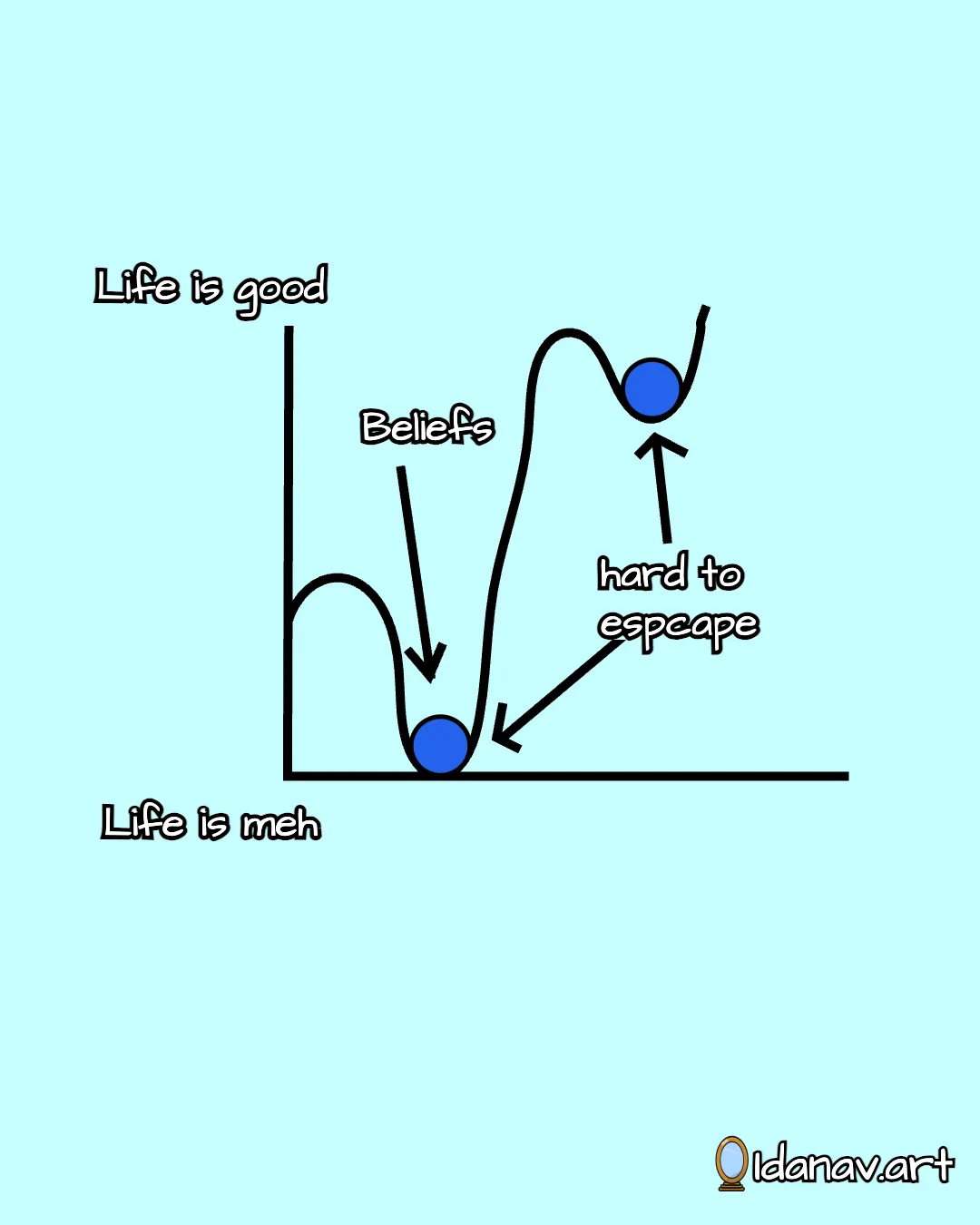
- Beliefs are hard to change - it usually takes an intense moment or frequent pressure to change our beliefs from one anchor to the next, but it also helps us. When we get to anchor good beliefs, they are hard to change as well.
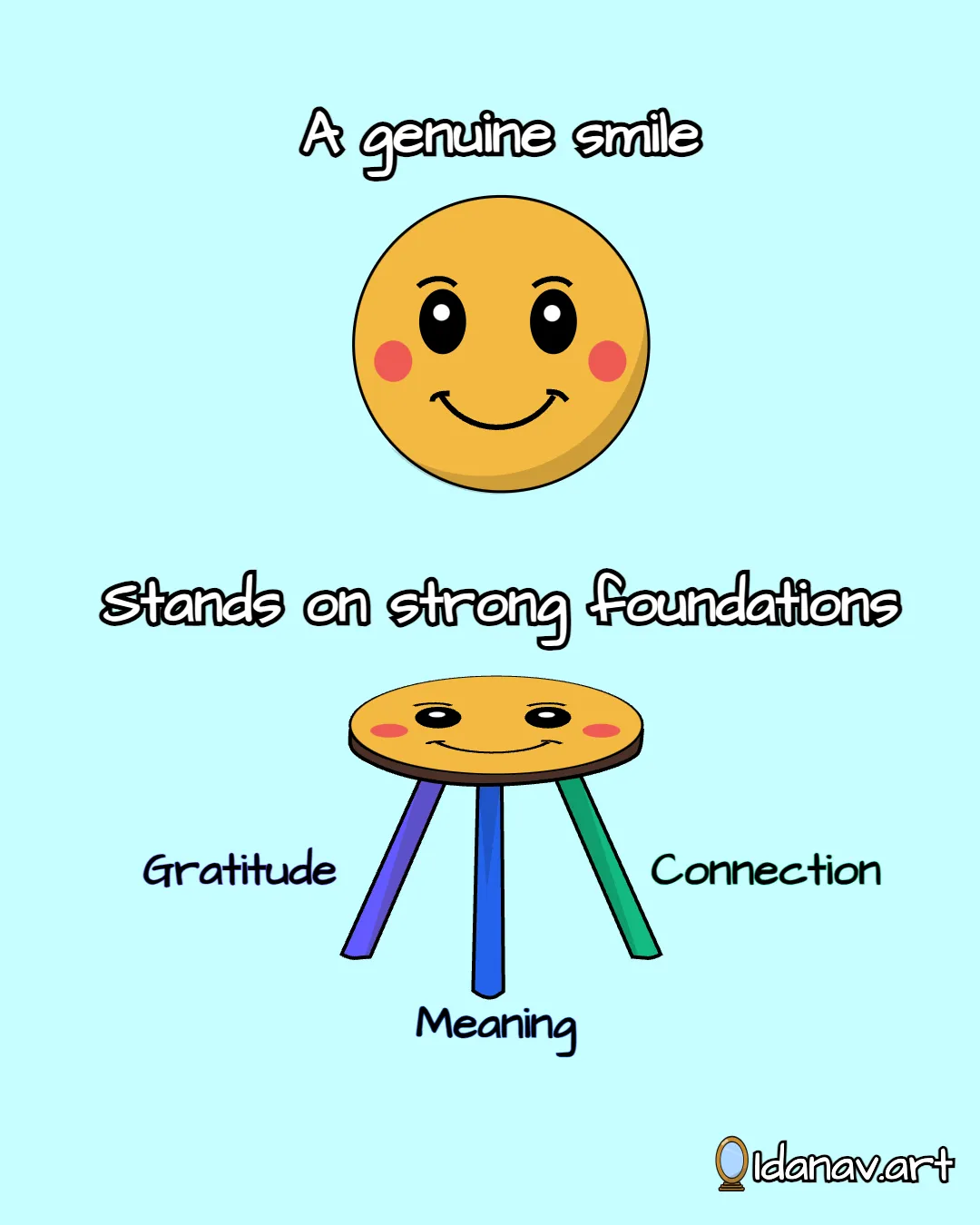
- Believe that you matter - To feel like we matter is the difference from feeling alone, alienated, depressed. Optimism on the other hand, that you can do meaningful work, that you have something to give, that you're not alone, that you matter to those around you is a powerful motivator.
- Believe that you have something to be grateful of - instead of endless fomo and comparing yourself to others, focus on what you have, on what you can be grateful for. You switch from a "survival" mode to "flourishing" mode, opening your mind for creativity, problem solving, and advanced thinking.
- Believe that you are connected to a greater purpose - The belief that powers all others. When we feel connected to something larger than ourselves, whether it's god, humanity, karma, nature, we're filled with purpose, like we matter, like we're not alone.
Relate
⛓ by following this method, what will happen? What is the goal of this book? Happier, more resilient, fueled by beliefs that will help us overcome challenges and flourish.
Act
📋What should I do to achieve the goals set out by this book?
- Create positive belief declarations – write specific and warranted belief statements rather than vague absolutes (e.g., "I will increase my chances of beating cancer by following a diet, medicine and exercise routines").
- Perform the disaster elevator – write down the worst possible outcome at number 10 and work backwards through a range of increasingly better, yet still negative, outcomes to escape rumination.
- Practice memory hacking – mark positive memories or photos as favorites and create a habit of regularly revisiting them to strengthen positive core beliefs.
- Prune negative mantras – eliminate negative self-talk by implementing a punishment system (like a swear jar) each time you utter a harmful mantra.
- Add caveats to negative thoughts – replace negative mantras with a positive spin or qualifier, such as transforming "I'm so busy" into "I'm so busy, but these are good tasks."
- Reframing scarcity – shift your view from "I don't have enough" to "I have something to give" by phrasing your limitations around resource management and capacity.
- Signal your beliefs and optimism – be vocal about your values to attract early adapters and start a cultural ripple effect.
- Curate your social environment – reduce negative cultural influences by cutting back on social media and influencers, and spend more time with in-person groups like friends or a book club.
- Engage in job crafting – actively decide to make your work meaningful by focusing on how you help someone, build friendships, grow, or support people you love.
- Use negative meditation – reflect daily on great obstacles you've overcome to shift your perspective on day-to-day events and change your anchor points.
Critique
🧩 relevant research, metaphors or examples that helps to convey the argument
- Home field advantage – Anecdote/Observation – Describes how sports teams benefit from the fans cheering for them rather than the geography itself, providing a boost of confidence. Supports: Others' beliefs affect our confidence and mental state.
- Planting seeds in barren soil – Metaphor – Compares taking action toward unlikely goals to a farmer planting seeds when nothing appears to be growing. Supports: We must focus on possibilities rather than low probabilities to achieve future realities.
- Military training intensity – Case study/Real-world example – Explains how extreme intensity and structural environments can rapidly and permanently change beliefs about personal capabilities. Supports: Severe experiences or effort can alter anchor points and deeply reshape identity.
- The disaster elevator – Thought experiment/Strategic tool – A written exercise where the worst outcome is placed at number 10 and worked backward to slightly better, yet negative, outcomes. Supports: Escaping rumination helps us realize things are not as bad as we fear and that we can handle what comes next.
- The Memory DeLorean – Metaphor/Practice – The process of neuroscaping by taking happy memories and re-encoding them to build a storehouse of positive experiences. Supports: Remembering and revisiting the good alters our beliefs about what is possible going forward.
- Glitter in a preschool class – Metaphor – Compares positivity to glitter that spreads everywhere even when only a small amount is used. Supports: Small displays of optimism and energy act as catalysts that create a positive ripple effect in our ecosystem.
- Brain wave alignment during shared stories – Scientific finding – Notes that reading and sharing stories together causes people's brain waves to line up and brings them in sync. Supports: Common texts and narratives serve as a unifying force that aligns people.
- Walking faster in a stressful city – Observation/Behavioral example – Illustrates how simply being present in an environment can influence physical behavior and internal stress without explicit words. Supports: Social environment and cultural norms shape our actions and neurological state.
- Placebo effect in health – Scientific finding – Shows that people given a placebo experience the same real physical improvements over time. Supports: Beliefs don't just describe reality, they actively shape and bend it.
- Young athletes and NBA probabilities – Statistical example – Points out that young athletes have less than a 1% chance of making the NBA, yet trying creates a possibility that grows with effort. Supports: Believing in a possibility rather than focusing purely on odds drives us to try.
❌ the logical jumps, holes or simply cases where it is wrong...
🧱 Implementations and limitations of it are...
🗨️Review
💭 my opinions on the book, the writers style... When I look back at my notes, it doesn't seem as much as I thought it would be when I ranked it a "4". Perhaps the storytelling, the prose, the flow covered for the rest. But I like the topic, it includes all that you need without extra fluff, it makes you belief.
While the theoretical side is a bit lacking, the majority is the practical tips which is just what you need. Because everyone knows you should belief that you matter, it's "how" you do it that's hard.
Outline
Notes
Part 1
The Power of Beliefs is Ascending
Beliefs don't just describe reality, they shape it Believing makes it real.
Even in areas such as health, belief plays a big role. The Placebo effect is not only significant, it's getting stronger over time. People who got placebo experienced the same improvements.
It's not just your own beliefs that affect you, it's also others' beliefs others' beliefs affect our confidence. The famous "home field advantage" is not the geography, it's the fans. Seeing people who root for you gives you a boost of confidence.
Beliefs are on the one hand a type of probabilistic thinking, because we "believe" we could attend vacation next week, or that we will reach retirement, but it's also a form of Subjective Reality, because we can believe we're all alone even when surrounded by people, or that we still lack even when we're rich.
Beliefs also have a social effect. Like money or the value of stock, Social Constructs are created or broken by belief alone.
Beliefs are potentially a great source of motivator, like how imagining that you're near the finish line, you suddenly get filled with energy, but it's also a great source of depression Beliefs fuel emotions.
In recent decades we see it even more as part of the great drift enlightenment. There's a collapse of shared beliefs and community, the rise of Individualism , Nihilism, and the fall of religion, which means we are less connected Loneliness, and less happy.
There are seven harmful beliefs that are a symptom of the great drift:
- My behavior doesn't matter
- I'm missing out
- I don't matter
- I don't have enough
- I'm alone
- This work is not meaningful
- There is nothing greater than me
The goal is to revive beliefs and flip the script to:
- My behavior matters
- I'm grateful
- I matter
- I have something to give
- I'm not alone
- This work is meaningful
- There is something greater than me
- Scientifically speaking, beliefs don’t just reflect reality. Beliefs bend reality. (Location 90) ^ref-52361
- if we change someone’s beliefs, we can observe a quantifiable impact on their success rates regardless of their training, strength, genes, and environment. Your beliefs matter. (Location 193) ^ref-63166
- Beliefs are the lens through which our brains process the world and decide on a path. (Location 215) ^ref-21502
- The lens through which you view the world predicts not only your experience of the present but also the trajectory of your future. (Location 243) ^ref-15334
- Our brains don’t just respond to chemistry; they respond to meaning. (Location 248) ^ref-27708
- Positive belief does not guarantee outcomes, but it does propel us toward them. (Location 254) ^ref-22148
- Where once shared rituals and collective narratives mitigated existential anxieties, their absence has allowed for the spread of nihilism and hyper-individualism. (Location 299) ^ref-8286
- The seven core power beliefs are: My behavior matters. I am grateful. I matter. I have something to give. I am not alone. This work is meaningful. There is something greater than me. (Location 316) ^ref-24938
Exploring how Beliefs Scientifically Change the Outcome
Beliefs change reality. First they affect how we act. All those star athletes that have a ritual before or during a match that puts them in "the zone" for peak performance.
Second, it changes what we see. Our beliefs change our lenses which affects what we notice. When we think we're unlucky, we won't notice opportunities, when we think the world is a bad place, all we see is bad news.
Changing the lens makes us feel as though the world is now different, like learning a new word that now appears everywhere learning something new causes you to see it everywhere. It was always there, we just didn't notice.
The goal is not to pick a random belief, but rather beliefs that empower and improve our lives Pragmatism.
The beliefs we consume is the reality we'll see what you consume is what you think. If we focus on the negative, like hearing that people our age are lazy, we would become more lazy, but the reverse is true as well. Having signature beliefs would propel us to a better future, like believing we are strong and capable.
- Negative beliefs can ravage our ability to create a positive future by catastrophizing the present and causing us to fail to see a path forward. (Location 475) ^ref-33632
Bending Reality: how Beliefs Change the Path
A belief is useful only if it motivates us to behave differently. In contrary WIshful Thinking is usually non productive or even counter productive because we stay in place, complacent instead of acting differently.
So believing you'll win the lottery is not helpful. Believing you can be a better dad might.
Beliefs can be:
- General vs possible (similar to "is vs ought")
- Qualified or not (qualified = pure absolutes like "I'll never...")
- True or false
- Justified (warrant) or not
We can use those to create better belief declaration. A "I will beat cancer" is not a good belief because it's not warranted (concrete) and qualified (specific). A better belief declaration is "I will increase my chances of beating cancer by following a diet, medicine and exercise routines".
We need to distinguish between "possibility" and "probability". When we're focused too much on probability, we're less likely to pursue a goal. For example young athletes have less than 1% of becoming an NBA player. By that logic they should all quit, but fortunately not all do. Because if you don't try, your chances are 0. When you do try, you have a possibility of getting a yes, which can grow with effort.
- Belief plus behavior can bend the probability of a future reality. (Location 572) ^ref-43897
- it’s easy to get caught focusing on probability not possibility. No farmer plants seeds if they believe nothing can grow. But sometimes we must plant seeds in soil that looks barren, believing that somewhere down the road, new life may emerge. (Location 673) ^ref-25954
- Beliefs change not only what we accomplish, but what we try to accomplish. (Location 710) ^ref-60219
The Nature of Belief Change
The good thing about beliefs is that they can change History is not destiny. However they don't change easily.
All beliefs are based on anchors, which serve as the basepoint for any comparison or understanding of the current situation. Beliefs change when we switch our anchor points perception is always relative to anchor points
Usually it takes a serious effort for anchor points to change. Like how military training changes beliefs about your capabilities for life lasting change requires intensive disruption. Moments of extreme intensity can change you rather quickly Identity Discovery
Another way of changing anchors is through consistency. Having a mental habit like negative meditation can change your anchors. If everyday you reflect on great obstacles you've overcome, you shift your perspective on those little day to day events.
Traumatic events can be... traumatic, but they can also be a source for growth Post Traumatic Growth. Positive belief change can happen from either good or bad moments.
- repetition can drive an anchor deep. (Location 866) ^ref-62290
- positive belief change is possible in all times, whether good or bad. (Location 947) ^ref-16426
Part 2 - the Core Beliefs
Introduction to the Core Power Beliefs
The seven core beliefs have the power to stabilize and improve our lives, and save us from the four horsemen of modernity: burnout, depression, anxiety and isolation
My Behavior Matters
When we don't belief our actions matter, we stop acting. We become apathic. We don't even try to resolve our problems, we've lost all hope pessimism is believing problems are fixed and unsolvable.
On the other hand, a mindset that's powerful, effective and beneficial is the belief that you do have an influence over the world. It doesn't mean to be delusional and think that you're responsible for everything that happens everywhere, or believing that can do anything. It takes a combination of Acceptance of our locus of control, while also being Optimistic about your ability to solve your problems.
- Optimism is not the belief there are no problems. Optimism is a belief that we can fix the problems. (Location 1061) ^ref-64601
I Am Grateful
A surefire way of becoming miserable is to Compare ourselves to others. Another is to be ruled by FOMO. Both stem from the same notion - the dissatisfaction of where you are, and wanting to be elsewhere. What's worse about fomo is that it falls to the Halo effect. We only see the good aspect of those we envy, without seeing the price they pay, or the bad aspects of there lives. We're comparing our lives to a fake, non realistic perfect version of someone's life.
The answer to those is Gratitude. Gratitude is not complicancy. You can be ambitious, optimistic and full of gratitude. Gratitude is not accepting bad situations, it's noticing the good that helps you overcome them.
- The most effective way to remove the sting of missing out is to refocus the brain on gratitude for the present. (Location 1127) ^ref-5389
- Every moment of FOMO is a mental blindness to the good things in our life. (Location 1148) ^ref-8432
- When we’re facing bad times, we can find gratitude not in the negative situations themselves, but in other areas of our lives that can help us out of these hardships. (Location 1207) ^ref-30042
I Matter
It's easy to feel like we don't matter, that's the default nowadays, especially if we let our inner critic run wild. That's always a negative viewpoint available for everything that we do, or something else "better" that we cloud have done.
Also it's hard when we don't see the result of our actions. Like a teacher that doesn't see how their students turn up as adults. If possible, it's best to know that you made a difference recognition gives a motivational boost.
To feel like we matter, we need to feel seen, the object of attention Feeling seen makes us feel like we matter. When others are paying attention to us when we speak, we feel like we matter, and vice versa when they're on their phone.
Having someone dependent on you, even an animal or a plant is enough for a stronger sense of mattering. To be a caretaker gives meaning Dependency.
- What we give attention to becomes our meaning. (Location 1290) ^ref-41510
I Have Something to Give
Life is stressful, and when we're focused on "I don't have enough" time/money/influence, the brain is entering a survival mode that narrows down our thinking, focusing us only on the threat, not on solutions (or what we do have to give).
It's not a surprise that we're in survival mode, because today's Hustle Culture pushes us towards endless busyness and a feeling of scarcity.
It requires a Reframing to change our view from "I don't have enough" to "I have something to give". Through sentences like "I have time but i'm spending much of it on my family". Despite it still sounding limited, it's empowering. Our brain shifts from threat to capacity and resource management, where it shines in it's ability to be creative, useful, and even provide us with a boost of oxytocin.
- A survival-oriented mindset dramatically alters our beliefs, and it impairs our ability to think creatively, plan, or empathize with others, (Location 1386) ^ref-2164
- The more the brain focuses on capacity rather than scarcity, the greater our experience of the present, the kinder our actions, and the more we become the good person we believe we can be. (Location 1452) ^ref-30030
I'm not Alone
We're not meant to be alone Human is a social being. Without others around us, everything is perceived as more difficult. When we're not alone, we are much more resilient, braver, happier, healthier and stronger Happiness is shared Intelligence is an emergent property of knowledge networks.
Having someone by your side is not just a "nice to have", it's the key for performance and happiness, both at work, at studies, and in your personal life.
- If our brains are shaped by connection, the pursuit of happiness and success can’t just be a solo project. (Location 1485) ^ref-43658
- We are biologically braver together. (Location 1513) ^ref-7341
This Work is Meaningful
Work can be a place of burnout, or it can be a place of meaning. First, it's a matter of perspective. One can "decide" it makes meaningful work Job crafting. There are 4 main reasons for a meaningful work:
- I help someone
- I have friends at work
- The work helps me grow
- It supports people I love
Even if work is stressful, it's not a bad sign. Stress itself has positive or negative implications based on how we perceive it Stress can be adaptive or harmful depending on perception and context.
- Contrary to popular notions, stress is enhancing—it can make you smarter, healthier, more resilient, and more connected, and it helps you find more meaning. (Location 1607) ^ref-16957
- Core Power Belief #7: “There Is Something Greater Than Me.” (Location 1659) ^ref-41565
There's Something Greater than Me
This core belief is the first amongst equals. It fuels and strengthens all other core beliefs. When we believe there's something greater than us connecting to a larger goal brings meaning, whether it's god, nature, karma, the universe, we are no longer alone. We find purpose in life, we're more resilient, happier and healthier.
- Believing there is something greater than me strengthens the beliefs that I am not alone, I matter, my behavior matters, my work matters, and I have something to be grateful for. (Location 1736) ^ref-14083
Part 3 - Making it Work
The Disaster Elevator
When we're afraid, when a challenge is coming, we tend to catastrophize. We imagine the worst possible outcome as the most likely outcome.
The disaster elevator helps us escape rumination and see a broader (and more likely) range of possible outcomes.
It starts with putting the worst possible outcome at number 10, and then working backwards, each number is a slightly better (yet still negative) outcome, so 10 is the worst, 9 is a bit better, and so forth.
You must do it in writing Writing is how we think, not just its output Extended Mind. Doing it physically makes a difference.
Then, we might also extend the elevator to potentially good outcomes.
- The Disaster Elevator helps us to realize that things are not as bad as we fear, hope is possible, and you can probably handle what comes next. (Location 1931) ^ref-37338
The Memory Delorean
Our Narrative is a collection of memories, and memories are not static things that last forever, they are both edited each time we remember them, some of them are pruned, and only those we reencounter survive. Our long lasting memories are long lasting before we tend to revisit them. We watch videos, photos, we talk about them.
That means we can do a sort of "memory hacking" or "trip down memory lane". To create a habit of revisiting positive memories that strengthen our positive core beliefs. Like a momemnt shared with friends so that we won't feel alone, or doing some brave, or meaningful.
Have a habit of marking photos or memories as "favorites" and also a separate habit to review them.
- Remembering the good not only helps us feel better, it changes what we believe is possible going forward. (Location 1946) ^ref-46520
- neuroscaping—taking our best and happiest memories and re-encoding them over and over in our brains so that we have a storehouse of positive experiences (Location 2019) ^ref-51389
Stopping Negative Mantras
Where our thoughts go, we go. Unfortunately, it's just too easy to fall into negative thinking, repeating mantras that are bad for our identity and behavior, such as:
- I can't
- I'm stupid
- I'm bored
- I'm too old
- I'm too busy
- No one likes me
- Life is unfair
- I always mess things up
What we think, we become Repeated actions become automatic through habit formation
There are two steps to replace those negative mantras with positive ones:
- Prune them out - like a swear jar, give yourself a punishment each time you say a negative mantras
- Add a caveat - find the positive spin, like "I'm so busy, but these are good tasks" or "I'm sick, but tomorrow I'll be better
Replacing removed habits sustains behavior change
- The more we repeat a belief or action, the stronger the neural connections become. (Location 2122) ^ref-64795
Starting the Wave
Changing yourself is one thing, but we could also change our environment, to be a force that will "start the wave" and everyone else will follow. If changing one person is revolutionary, what if we change a culture?
Changing a culture is creating a Ripple effect, that your change will persist beyond you, but it takes work. First of all, it takes being a role model, you have to be the change you wish to see in the world. Second, it takes a Critical mass of early adapters. If the message is strong, and many people go along for the ride, a change can happen quickly and stick. The same idea applies that when a culture has changed, the change can persist even when the original movers have ended because it's self perpetuating.
Be "that guy", that starts a change that becomes a virtuous cycle. Do so by being vocal about your beliefs and your optimism. signal that you care and want things to be better, this will help attract the early adapters to you.
- one of the most powerful ways to change beliefs is to create positive routines designed to initiate a positive ripple effect to those around us, which makes sustaining the positive belief easier. (Location 2250) ^ref-61397
- Positivity is like glitter in a preschool class: Even just a little bit goes everywhere. (Location 2349) ^ref-40667
- We are constantly changing others, even when we don’t see it. Through our energy, our choices, our optimism, and even our presence, we are catalysts of change, which can make our entire ecosystem better. (Location 2408) ^ref-58302
Common Text, Common Belief.
We are united by stories. Specifically written stories, treaties, mission statements, declarations, creeds, books etc have the power to be a unitying force. Creating a shared narratives, identity and a long lasting culture. This is because reading a story activates the Default Mode Network which is responsible (among other things) of creating the internal narrative.
When we share a story, we're literally more in sync. Our brain waves start to line up. A text is fundamental if it helps create shared rituals, like meetings, ceremonies, experiences. The story is the catalyst, the shared experience maintains the identity Shared identity strengthens solidarity
- Some texts uplift us, some limit us, and others cause immeasurable harm, but it is clear, shared texts help script what we believe. (Location 2457) ^ref-49356
- Stories don’t just move us—they align us. When we read together, we sync together. (Location 2487) ^ref-55441
Creating a Shared Neural Tribe
We are the people around us Social influence. The norms of the place we are in shape our beliefs. Especially, the stronger the message, it's frequency, and immediacy, the more likely we are to be affected and assimilate Emotional Contagion.
For example workaholism, body image, political extremism, is not a matter of personal beliefs, it's a cultural influence at the level of your neurological tribe.
It doesn't even take words to be affected, it like it's exist in the air itself Social influence can spread without words, through ambient environment alone. Like how moving to a stressful city makes you walk faster just by being there.
So we have to be mindful of the influences we are under, and replace negative ones with positive ones. Like less scrolling on social media, and more spending time with friends or a book club.
People we don't know (like influencers and celebrators) have way too much influence on us, we need to cut it back.
- A neural tribe is more than just a friend group or a supportive team—it is a living, breathing ecosystem of minds and hearts that reinforce the beliefs we most want to grow. It keeps a steady cognitive drumbeat of adaptive, empowering ideas (Location 2578) ^ref-56071
- The happiest individuals consistently surrounded themselves with positive social support and minimized exposure to negative inputs, which protected and amplified their well-being over time. (Location 2678) ^ref-25779