Winning an argument often feels like a victory, but it frequently comes at the cost of our own growth. When we prioritize protecting our identity over accepting external truths, we end up isolated and stuck. Perhaps it is time to ask whether being "right" is truly worth the price we pay.
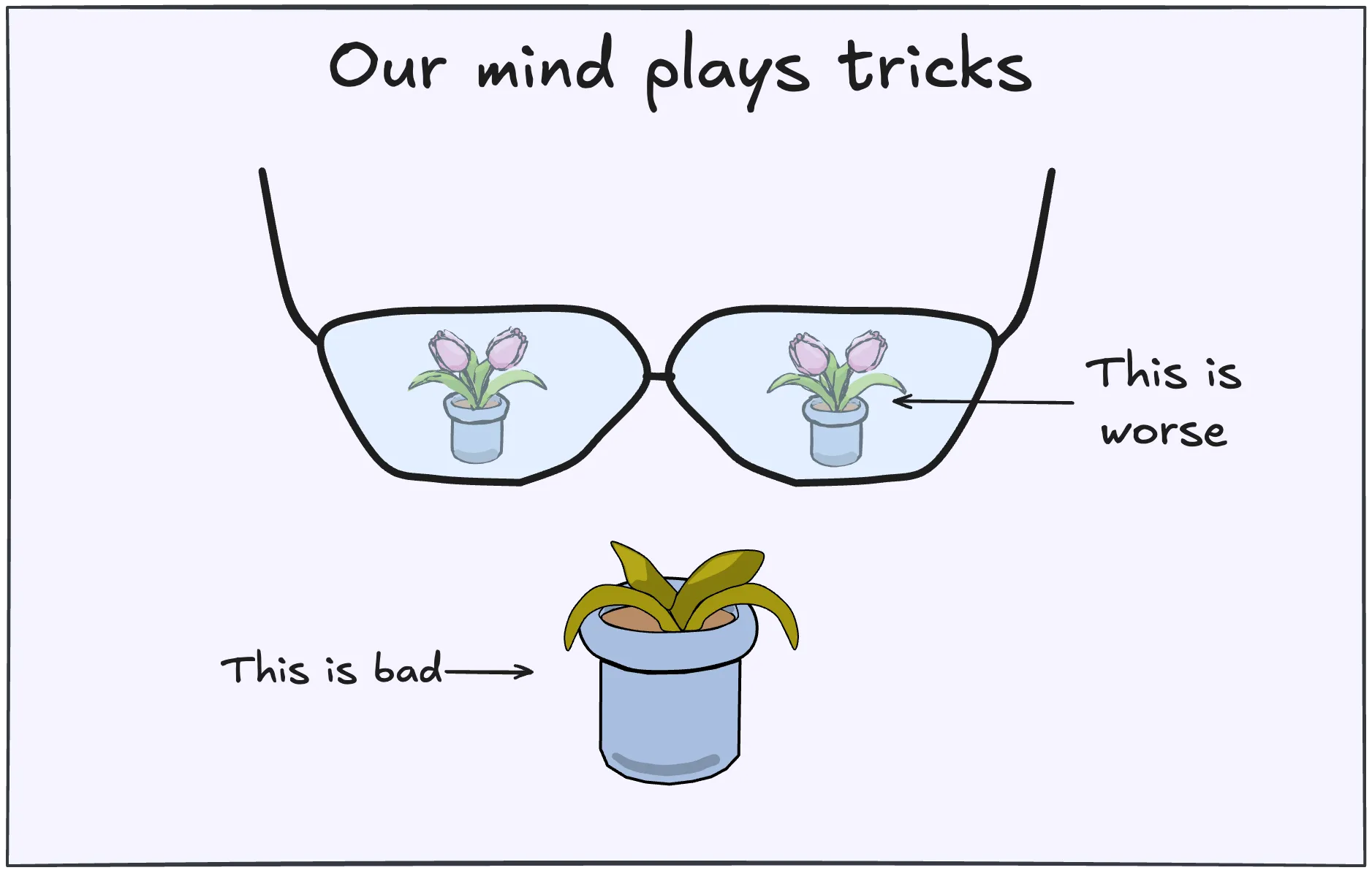
How We Rewrite Reality
The stories we tell ourselves can be harmful, especially when we don't see them as such.
We love being right, I mean... who doesn't? And sometimes without even noticing we can bend reality and even our identity just to have that feeling of righteousness.
And you probably know how great this feeling is, when "truth" and "logic" are by your side, that everybody else is wrong and you deserve compensation or vengeance. But the paradox is that the more we want to be right, the more we distance ourselves from the truth.
This desire isn't a sin in itself. We all want to be validated, and we all have moments where we feel like the entire world is against us, so subconsciously we face a difficult choice - is everyone else right, or am I?
As the external observer, it's easy to say that it makes sense to agree the world is right and they are just delusional, but when it's us facing that question, answering it becomes suddenly very hard.
It's because our identity is now on the line. If we made a mistake, if we are "in the wrong", then who are we? Are we bad people? Are we weak and incapable of overcoming hardships?
It's a truth that's hard to swallow, so we go with the alternative - detaching our internal reality from the external one, and create a world where we are the good guys.
What's Wrong about Being Right
When truth is our enemy, the first step is to blindfold our mind. We rewrite our story to protect our ego, our perception of self. But for a narrative to sink in, it has to go all the way. We can't believe a fake story, otherwise it won't be effective. It must go all the way down.
So we no longer question ourselves. We don't even consider that we might be wrong, after all - all the facts point that we're right.
But lying to ourselves is never free of consequences. Sartre claimed that the truth is always known to us whether we like it or not, which means sooner or later we will either have to "face the music" or inflict more pain to us and those around us to maintain the lie - "The one to whom the lie is told and the one who lies are one and the same person, which means that I must know in my capacity as deceiver the truth which is hidden from me in my capacity as the one deceived."
Living a lie means that at best we're ignorant of contradicting evidence, at worst we deny it. We fight to keep the false narrative alive, only digging a deeper hole that will be harder to crawl out from.
We push people away, we miss opportunities for growth, our worldview shrinks along with our identity.
Powerful as we may feel, there's a limit to our power on reality, which means the greater the lie we tell ourselves, the more we are going to suffer when reality pushes back.
Truth, the elusive concept that it is, overlaps completely if not mostly with "what works", or as William James called it - "the verification test of truth". Something is true because it is "there". For example, whether the world is round or flat has a dramatic implication on how we travel in it. Flights that treat the world as flat will take longer to reach their destination if they manage to do so at all. Believing we are the best despite not growing at all will be a hard sell in job interviews.
Snap back to Reality
So how do we get back on track? There are some good news and bad news.
The good news is that it's easier to stop at the beginning.
When the story is new, there's still time before it takes root in our minds. We still have doubts.
The bad news is that those moments are very difficult to handle. It's precisely because these endanger our ego that we tend to avoid/resolve as quickly as possible. However, if we could take a pause, let the emotions cool down and just be present, to listen to our internal monolog as an external observer and notice whether it strays from the truth, that's when we can gently go back to reality.
These mindfulness practices are no longer a "nice to have" in our lives. Meditation is like the rope astronauts are attached to when venturing outside of the spaceship. You need it to avoid drifting into the endless sea of unknown.
How will you know that you're on the right path back to earth?
What are you defending - First try to see whether you felt defensive or not. This is usually the greatest hint that we feel threatened by something. Our ego automatically tries to protect itself, so we end up rejecting or attacking any threat, even (and especially) if it comes from a friend.
Fixing or avoiding - Next, ask yourself whether your responses aim at solving the situation, or detaching yourself from it? For example, if a boss comes with a "brutal yet honest" feedback, are you focusing on their personality, on how clearly they see the world and whether they're just biased, or whether this feedback is true (to an extent) and there's something to learn here?
Is it worth it? - Lastly, even if you still believe you're right - ask yourself if your version of the "truth" is worth it. Let's say you had a fight with your partner, each believing that they are right. What is the benefit of "winning the argument"? Is the relationship going to improve if you out-maneuvered their logic? Or rebutted them to submission? Sometimes it's just not about being right. Some things are more important.
Letting Go
One of the hardest things to do is to adjust our internal reality to the external one and not the other way around. To let go of our ego and focus on what matters. Being a good person, a good friend, and continue to get better and happier over time.
I continue to make mistakes and that's okay. As long as I get back up and keep on going, I know i'm on the right track. How about you? How do you treat your mistakes?