Is the pressure to "step out of your comfort zone" actually helping you improve, or is it just a form of self-punishment? Instead of moulding yourself to fit external expectations, it's worth asking if your current pursuits align with who you actually want to be or what you truly value.
Everything, Everywhere, All at once
Staying in your comfort zone can actually be the right move.
The popular advice is always to "step out of your comfort zone", as if having limits is necessarily a bad thing, like a burning flame that we constantly need to push away from us.
It has reached a level of toxicity where if you stay in your comfort zone you're tagged with negative labels such as "fixed mindset", "passiveness" and you're not "fulfilling your potential".
We're expected to grow for the sake of growing, without a care for the (high) costs or (low) benefits.
Stepping out of our comfort zone in every aspect of our lives means to make a real effort in everything we do, to never rest or settle for easy, to never accept the default behavior.
No wonder we experience burnout and then to make matters worse we blame ourselves for not reaching these impossible standards.
A Master of All is a Master of Non
This "do it all" mindset is very strong despite the fact that it's counterintuitive when you look at what brought people real success.
The great artists know what to focus on, it's probably one of their great contributors to success. They spend countless hours honing one tiny skill to perfection, which helps them rise above others in their fields.
A great basketball player doesn't spend time playing hockey, and even in basketball they specialize in a certain role they play in the field. A good musician might know how to play multiple instruments, but they usually perform with only one.
Our focus, time and energy are scarce resources. It makes sense that spreading them in every direction is hardly worthwhile.
This doesn't mean that experimentation is worthless, on the contrary. Trying things outside your realm of expertise can be eye opening and enriching. Each field has a certain way of seeing and doing things, often inhibiting growth and change.
Playing with other methods might help you learn new perspectives that will change completely how you see your craft, and how it can be improved. For example, Steve Jobs learned calligraphy which on the surface seems unrelated to electronics design, but he claimed that it gave him inspiration for the smoothness and elegance that's now recognized with Apple products.
However, there's a great difference between playing and specializing. Trying out new areas doesn't mean to dedicate yourself completely to becoming an expert. The road to mastery is long and complicated such that mastering one is hard enough.
As Secena, the ancient stoic philosopher said - "Nusquam est qui ubique est", which means "One who is everywhere is nowhere." (it sounded cool in Latin as well so I had to keep it).
From Self Punishment to Acceptance
Don't "try for the sake of trying", be intentional with where you spend your focus. It won't just help you become better at your main craft, more importantly it will also help you rest and avoid burnout.
Choosing one main focus has a cost we secretly dread from - accepting our imperfection. Logically it seems obvious we should stick with one main area, but often we fail to do so because it means we have to live with flaws or "wasted potential".
This "cost" is also the greatest benefit from narrowing your focus and slowing down. Instead of exhausting yourself at every opportunity, you allow yourself to skip those and rest instead, to be okay with not knowing or being the best at everything. This is quite a liberating experience, I really recommend you to try.
For example, I'm an introvert and as such I always blamed myself for not being more "outgoing" like my extrovert friends. I felt shame for being an introvert, basically rejected a part of my identity.
To an extent, trying to be more like an extrovert wasn't a form of stretching my comfort zone, it was a form of self punishment.
It took me a while to realize that it's okay to be an introvert, it's okay to not like dancing or huge outings. I don't have to do any of these things, and it doesn't make me a lesser person.
It also means that if I ever want to expand my comfort zone, I can do it my way - for instance I can go to a book club or board game night instead of a bar or some form of public speaking.
This takes me back to the concept of Nietzsche's "Ubermench". I first imaged it as superman-like - all capable, brave, and strong. But after reading his work, I realized the nuance of his argument - all Nietzsche cares about is you following your path, no one else's. Being an Ubermench doesn't mean to be a perfect powerful being, it just means to be yourself.
Justified Comfort
It's important not to swing too hard on the opposite direction and label everything as unjustified push outside of our comfort zone.
But how can we differentiate the two?
Is it who I want to become - ask yourself this question. If everything goes well and you manage to expand your comfort zone, does it bring you closer to the type of person you want to be?
Sometimes we're so focused on reaching the goal that we fail to notice the price we'd have to pay.
Internal vs external motives - is it your innate desire that motivates you or external expectations and peer pressure?
If it's only because others push you to do so, then it's not worth it. Your identity is not clay to be freely molded by others.
A distraction or time well spent - How will your life look like after expanding your comfort zone in this area? Are they better? Are there other areas that you think worth more of your time and attention?
Taking a moment to pause and look at your life from a higher view can be beneficial, being intentional with how you want to dedicate your time and attention. And if you already have at least one area that you try to stretch your comfort zone, then it's likely that any other opportunity is more of a distraction than an actual benefit.
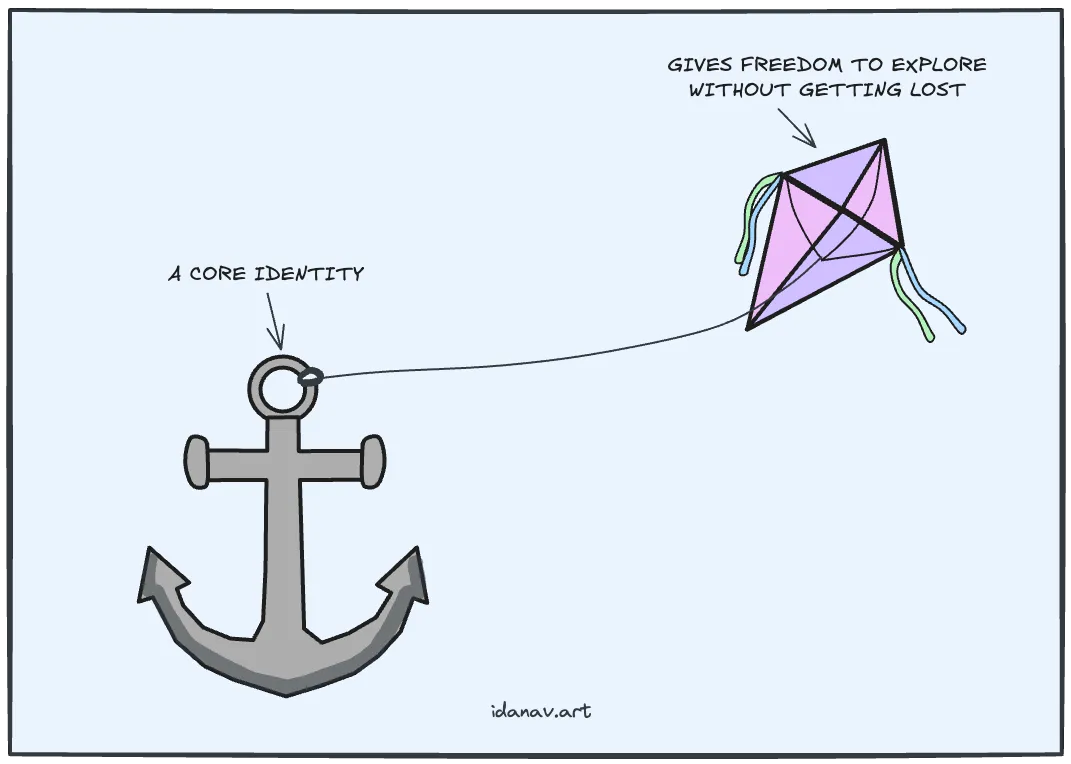
Growth is always a tricky subject. The desire to love your potential and willingness to change who you are at the same time.
It's easy to fall into either ends, in this case so focused on improvement that we forget who we are in the process, or what it's doing to us.
You can be a good person even if you're not good at everything, even if you have "weak moments" where you prioritize comfort over growth, and even if you don't reach your own standards.