We often feel guilty for "wasting time," yet a mind that is constantly productive rarely produces anything new. If creativity cannot be forced on demand, how do we create the right conditions for it to actually show up? Giving yourself permission to do nothing might be the most practical thing you do all week.
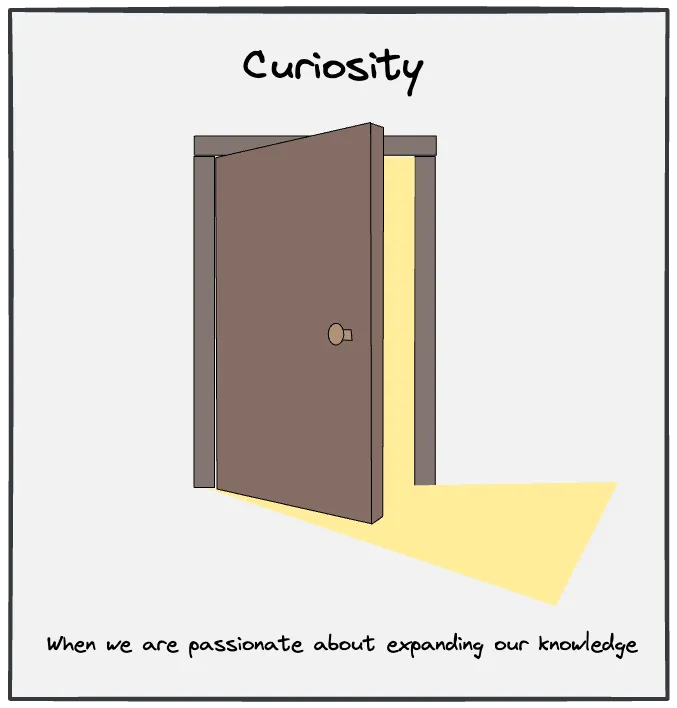
If you've ever seen a child "in the zone" while playing—as if the entire world is just them and their toy, then you know what pure curiosity looks like.
It is difficult nowadays to recall moments when we felt that way. Somewhere during adulthood we learned to shut it down, to see it as a "luxury". Who has time to just lose focus or play around? We have so much to do and so little time, and even if we wanted to, curiosity doesn't fit well with a busy, demanding schedule.
Often we feel like we can't keep up with life as it is. We believe every moment must be productive, and when it isn't, we feel guilty that we should have been doing something "better." This constant pressure is harmful; we often end our days exhausted and burned out, only to repeat the cycle tomorrow.
A common misconception is that curiosity or play is a waste of time. In reality, curiosity is as essential for the mind as sleep is for the body. In his book "The Burnout Society," philosopher Byung-Chul Han criticizes our obsession with productivity, noting: "A purely hectic rush produces nothing new. It reproduces and accelerates what is already available."
Have you ever had moments of sudden clarity, when an amazing idea just popped into your head and you had a burning desire to see it through? Maybe it was the melody for a new song in the shower, or a breakthrough you've been searching for the whole day only to come up when you're lying in bed. Curiosity brings the best in us. It makes us feel energized and creative, as if we are operating at 120%.
But you might have noticed a recurring theme - curiosity doesn't show up "on demand", we cannot force a spark of creativity. This is because the mind generally operates in one of two mutually exclusive modes:
- Default Mode Network (aka "downtime brain") - when we mentally rest and let our mind wander
- Executive Attention Network (aka being "focused") - When we focus intently on solving a problem.
Focus mode allows us to follow one train of thought while ignoring distractions. Downtime allows the brain to jump between tracks, exploring multiple options and making new connections. This is why curiosity is only possible when we let our mind rest. It also explains why a routine of work, chores, and sleep rarely sparks curiosity. Even when we sit down specifically to "be creative," we often hit a block because we try to force something that can't be forced.
However, even if we can't magically create the feeling of curiosity, we can create the conditions where it thrives. For example: ▪ Setting aside one hour a week completely unscripted - no chores, no emails, no "to-dos." ▪ Give yourself permission to follow a "rabbit hole," even if it is unrelated to your goals ▪ Putting our phone away during transition times (like commuting or walking) to let our mind wander.
In the past I accompanied my wife to prayers once a week. As a non religious person I had nothing to do but to sit and wait for an hour. T These became my most creative moments because I had no distractions - no phones, no screens, and nothing to do other than to let my mind play around with ideas. That hour of "nothing" more than paid for itself in creative output, with the added bonus of feeling recharged and motivated.
It doesn't matter how you let your mind rest, but remember that you can't have both ways. You can't multitask creativity. It requires a moment of courage, a conscious decision to stop what life compels us to do and simply let go, even for just a few minutes.
Despite his "Übermensch" persona, Nietzsche described a child-like mentality as one of the highest forms of character. The ability to "be yourself" without judgment or care what others think, fully immersed in whatever interests you.
I hope the new year brings you wonder, a slower pace, and plenty of creative spark:)